Mon - Fri 8:00AM - 5:00PM Central
1150 SE Hamblen Rd, Lee's Summit, MO 64081
2026 Top Types of Hard Concrete for Global Buyers
Choosing the right hard concrete in 2026 requires more than comparing compressive strength figures. Global buyers must examine application, climate, installation conditions, and verified test results. A warehouse floor facing steel wheels needs different performance from a bridge repair exposed to freeze-thaw cycles. This guide reviews leading hard concrete types for international purchasing decisions, including ultra-high-performance concrete, fiber-reinforced concrete, polymer-modified mixes, abrasion-resistant concrete, and rapid-hardening formulations.
Performance begins with the mix design. Cement selection, aggregate grading, water-to-binder ratio, fibers, and curing conditions can change the final result. A polished sample may look impressive, yet poor curing can produce surface dusting, cracks, or uneven hardness. It happens more often than product brochures suggest. Buyers should request technical data sheets, independent laboratory reports, batch information, and clear compliance references before ordering.
Regional conditions also matter. Humid ports, cold logistics routes, high-temperature sites, and remote construction areas create different risks. Experienced buyers compare strength retention, abrasion loss, permeability, setting time, and repair requirements rather than relying on one headline number. Supplier experience is valuable, but it should support evidence, not replace it. Product names can overlap between markets, and “hard concrete” may describe different formulations. That uncertainty deserves attention. The following overview provides a practical framework for evaluating leading options, asking better supplier questions, and matching concrete performance with real project demands.
Hard Concrete Classification: 55 MPa+ High-Strength and 120 MPa+ UHPC
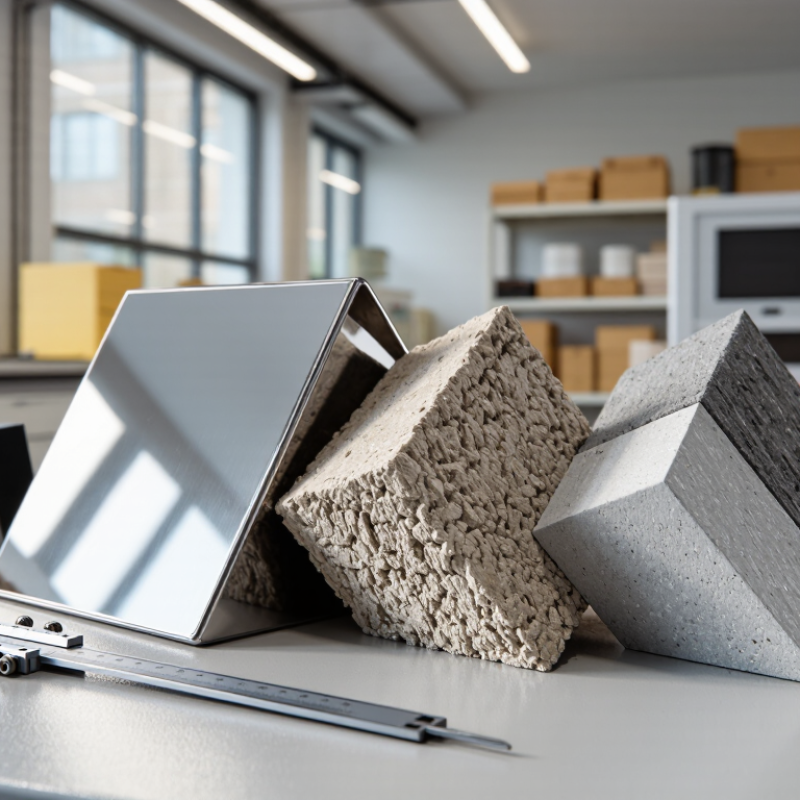
For global buyers, “hard concrete” should begin with verified compressive strength, not marketing language. ACI 363R-10 defines high-strength concrete as concrete exceeding 55 MPa. At this level, low water-to-binder ratios, supplementary cementitious materials, and controlled curing become decisive. A 55 MPa mix is not automatically durable. Chloride exposure, freeze-thaw cycles, placement temperature, and reinforcement congestion still matter on site.
UHPC starts at a higher threshold. ASTM C1856/C1856M uses 120 MPa at 28 days as its minimum compressive-strength benchmark. The Federal Highway Administration’s UHPC state-of-the-art report highlights dense particle packing, fiber reinforcement, and controlled heat or moisture curing. Buyers should request 7-day and 28-day test results, specimen dimensions, curing history, and testing methods. Small differences can distort comparisons.
In practical procurement, 55–80 MPa concrete often suits columns, industrial slabs, and heavily loaded precast elements. Mixtures above 120 MPa may reduce section size, but they require accurate batching and disciplined mixing. Site experience often shows laboratory strength falling when curing is inconsistent. That weakness deserves attention. Shipping distance, local aggregates, pumpability, repair procedures, and embodied carbon should enter the specification. Batch variation, independent testing, and documented quality controls deserve equal scrutiny.
| Concrete Type | Characteristic Compressive Strength | Approximate Strength in psi | Typical Density | Common Applications | Typical Technical Features | Key Buying Considerations |
|---|---|---|---|---|---|---|
| Standard Structural Concrete | 20–40 MPa at 28 days | 2,900–5,800 psi | Approximately 2,300–2,400 kg/m³ for normal-weight concrete | Residential and commercial frames, slabs, foundations, pavements and general civil construction | Good availability, established placing methods and broad aggregate options | Confirm local design code, exposure class, slump or flow requirement and aggregate size |
| Moderate-Strength Concrete | 40–55 MPa at 28 days | 5,800–8,000 psi | Approximately 2,300–2,450 kg/m³ for normal-weight concrete | Parking structures, bridges, industrial floors, precast elements and heavily loaded foundations | Lower permeability and higher load capacity than ordinary structural concrete | Check heat of hydration, shrinkage control, curing quality and pumpability |
| High-Strength Concrete | 55–80 MPa at 28 days | 8,000–11,600 psi | Approximately 2,300–2,500 kg/m³ for normal-weight concrete | High-rise columns, bridge components, prestressed members, offshore structures and heavy-duty industrial construction | Low water-to-binder ratio, supplementary cementitious materials and high-range water-reducing admixtures are commonly used | 55 MPa is commonly used as the threshold for high-strength concrete in ACI-based descriptions; verify the governing specification |
| Very-High-Strength Concrete | 80–120 MPa at 28 days | 11,600–17,400 psi | Approximately 2,350–2,550 kg/m³ for normal-weight mixtures | Long-span bridges, slender precast units, high-load columns, protective structures and specialized industrial facilities | Very low water-to-binder ratio, optimized particle packing and strict temperature and curing control | Review mixing energy, delivery time, placement method, early-age cracking risk and test age |
| UHPC Without Fibers | Typically 120 MPa or higher at 28 days | 17,400 psi or higher | Approximately 2,300–2,500 kg/m³, depending on mixture constituents | Thin precast panels, bridge overlays, joints, architectural components and repair zones requiring high compressive strength | Very dense cementitious matrix, extremely low permeability and often self-consolidating flow | Confirm whether the specification requires a minimum 120 MPa result and whether fiber reinforcement is excluded |
| Fiber-Reinforced UHPC | Typically 120–180 MPa or higher at 28 days | 17,400–26,100 psi or higher | Approximately 2,350–2,600 kg/m³, depending on fiber type and dosage | Bridge deck overlays, precast connections, thin shells, impact-resistant components and structural rehabilitation | Steel or synthetic fibers can provide post-cracking tensile capacity, toughness and improved resistance to localized damage | Specify fiber material, length, aspect ratio, dosage, orientation, mixing sequence and post-cracking performance |
| Reactive Powder Concrete | Commonly 120–200 MPa at 28 days | 17,400–29,000 psi | Approximately 2,350–2,600 kg/m³ | Specialized precast structures, thin architectural members, protective components and high-performance repair applications | Fine powders and sand are used with no conventional coarse aggregate; thermal or pressure-assisted curing may be applied | Confirm curing regime, dimensional tolerances, fiber requirements, raw-material grading and production equipment |
| Lightweight High-Strength Concrete | Approximately 55–80 MPa at 28 days | 8,000–11,600 psi | Usually below 2,000 kg/m³; project-specific limits may be lower | High-rise floors, long-span decks, offshore structures and elements where reduced dead load is important | Uses lightweight aggregate and requires careful control of aggregate absorption, moisture condition and strength development | Compare equilibrium density, splitting tensile strength, modulus of elasticity, fire performance and pumpability |
| High-Durability Marine or Chemical-Resistant Concrete | Typically 55–100 MPa at 28 days | 8,000–14,500 psi | Approximately 2,300–2,500 kg/m³ for normal-weight mixtures | Marine works, wastewater facilities, chemical plants, tunnels, water-retaining structures and de-icing environments | Designed for low permeability, chloride resistance, sulfate resistance and controlled cracking; strength alone does not define durability | Specify chloride diffusion or migration criteria, water-to-binder ratio, air entrainment, cover depth and exposure class |
Related Posts
-
Top Benefits of Using Strong Concrete in Construction Projects?
-

How to Achieve High Early Strength Concrete for Faster Construction?
-

What Is High Performance Concrete and Where Is It Used?
-
Why Fast Track Concrete is the Best Choice for Quick Construction Projects?
-
How to Choose the Right Pavement Concrete for Your Project?
-
What is Polyester Polymer Concrete and Its Benefits?