How to Achieve High Early Strength Concrete for Faster Construction?
High early strength concrete (HESC) has become essential in modern construction. This material allows for a quicker turnaround in projects. According to a recent report by the American Concrete Institute, utilizing HESC can reduce overall project time by up to 30%. Faster construction leads to cost savings and improved project efficiency.
Dr. James Ellis, a leading concrete expert, emphasizes the importance of HESC, stating, “Achieving high early strength concrete is critical for meeting tight deadlines.” His insight reflects industry needs for rapid strength gain. However, achieving this strength consistently can be challenging. Factors such as mix design, curing conditions, and material selection must be carefully managed.
While HESC offers significant benefits, there are pitfalls. Over-reliance on early strength can sometimes compromise long-term durability. Construction teams need to balance speed and quality. Continuous evaluation of methods is essential to ensure both immediate and lasting outcomes. This balance will ultimately shape the future of efficient construction practices.

Understanding High Early Strength Concrete and Its Importance
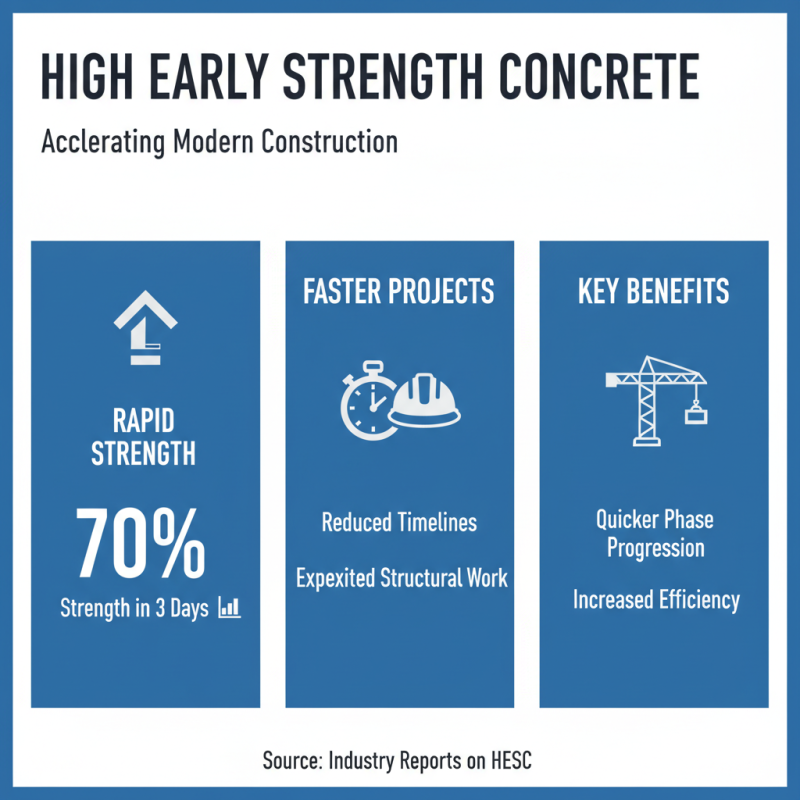
High early strength concrete (HESC) is crucial in modern construction. This type of concrete reaches significant strength within the first few days after pouring, reducing project timelines. Reports show that HESC gains up to 70% of its strength in just 3 days. This rapid strength development expedites structural work, allowing builders to proceed to subsequent phases faster.
Understanding HESC also involves recognizing its importance in heavy-loaded structures. In a study by the American Concrete Institute, it was noted that HESC can resist higher loads in shorter curing times compared to conventional mixes. This characteristic minimizes the risk of delays due to environmental factors like rain. However, achieving the right balance in HESC formulation is challenging. The mix must be optimized to prevent problems such as cracking or reduced durability.
Tip: Use pozzolans like silica fume to enhance concrete's properties while maintaining early strength. Also, monitor temperatures during curing. Elevated temperatures can accelerate strength gain but may compromise mixture stability. Consistent testing during the first week can ensure desired results are achieved. Balancing speed and performance is essential for successful construction projects.
Key Materials and Additives for Enhancing Early Strength
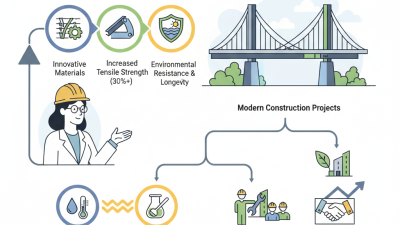
Achieving high early strength concrete is crucial for rapid construction. The right materials and additives can significantly enhance the performance of concrete at early stages. Data from the American Concrete Institute reveals that incorporating specific pozzolans and chemical admixtures can increase early strength by as much as 30% compared to standard mixes.
One effective approach involves using high-range water reducers (HRWR). These additives improve workability without adding excess water. Research indicates that a typical HRWR can help achieve compressive strengths exceeding 4,000 psi within just 24 hours, compared to traditional mixtures. Ground granulated blast-furnace slag (GGBS) and silica fume also contribute positively to early strength. However, these materials require careful handling and compatibility analysis to ensure optimal performance.
Another critical factor is the water-to-cement ratio. Lower ratios enhance density but may complicate mixing. A balance must be struck for workability. It’s also important to monitor ambient conditions. High temperatures can accelerate setting but lead to cracking if not managed. These complexities highlight that achieving high early strength in concrete is not straightforward. Each project presents unique challenges that demand detailed attention and diverse solutions.
Mix Design Considerations for Optimizing Early Strength Properties
Achieving high early strength in concrete is crucial for projects requiring expedited construction timelines. Mix design considerations play a pivotal role in this process. Utilizing a higher cement content, optimizing the water-cement ratio, and incorporating mineral admixtures like silica fume can significantly enhance early strength properties. According to the American Concrete Institute, mixtures with a water-cement ratio of 0.40 often achieve over 70% of their 28-day strength within the first 24 hours. This early strength development aids in quicker formwork removal and overall construction efficiency.
One effective approach is the use of chemical admixtures. Accelerating admixtures, such as calcium chloride, can improve early hydration, helping the concrete reach the desired strength faster. However, care should be taken to prevent cracking, as excessive heat may lead to thermal expansion issues. Additionally, the use of finer aggregates may yield a denser particle arrangement, thus enhancing strength properties.
Tips: Regular monitoring of temperature and humidity is essential. These factors can influence hydration rates and ultimately affect early strength development. Maintaining optimal curing conditions can mitigate potential issues. Ensure consistency in mix proportions, as fluctuating aggregate sizes or moisture can create unreliable results. Balancing the mix design with adequate trial batches can lead to improved outcomes.
Construction Techniques to Accelerate Strength Development
Achieving high early strength in concrete is crucial for
speeding up construction processes. Several techniques can contribute to faster strength development, allowing projects to progress
more efficiently. One effective method involves using high-performance concrete mixes.
These mixes incorporate supplementary cementitious materials, which enhance hydration and contribute to early strength gain.
Another technique is the application of curing methods that promote optimal moisture retention. Utilizing wet curing methods,
such as covering with wet burlap or applying curing compounds, can significantly enhance strength. However, meticulous monitoring
is needed. Over-curing can lead to issues like efflorescence, which may undermine long-term durability.
Temperature management also plays a vital role. Achieving the right temperature during the curing process fosters a conducive environment
for the concrete to gain strength. Heat curing can be beneficial, but improper application can lead to cracking.
Careful calculation of heat requirements is essential for optimal results. Ensuring a balance between speed
and quality is necessary.
Curing Methods to Ensure Quick Strength Gain in Concrete
Achieving high early strength in concrete is crucial for accelerating construction timelines. Different curing methods can enhance the early strength significantly. A research report from the American Concrete Institute states that properly curing concrete can improve strength by up to 50% in the first few days. Maintaining adequate moisture levels during hydration is key. This can be accomplished through methods like covering surfaces with wet burlap, plastic sheeting, or using curing compounds.
Using heat during the curing process can further promote rapid strength gain. A study published in the Journal of Materials in Civil Engineering indicates that exposing concrete to elevated temperatures can result in compressive strengths exceeding 80% of their 28-day strength within just a week. However, this method requires caution, as excessive heat can lead to surface cracking.
Not all methods work equally at all sites. Variability in environmental conditions means that a method effective in one climate may fail in another. If moisture is inadequate or temperatures are too extreme, the expected benefits may not be realized. Monitoring is crucial. Continuous assessment allows adjustments to be made to ensure that the early strength of concrete meets expectations. Balancing the speed of curing with the risk of damage is a challenge that requires experience and careful planning.