2026 Top Patch for Concrete Types Which Is Best?
Choosing the best patch for concrete in 2026 requires more than comparing drying times or package prices. The repair must match the damage, substrate, moisture, temperature, and expected traffic. A garage floor with a 3-millimeter surface crack needs a different repair from a bridge deck with delamination. Small details decide durability.
The International Energy Agency reports that cement production creates roughly 7% of global carbon dioxide emissions. The Global Cement and Concrete Association’s 2050 roadmap also stresses lower-carbon materials and longer service life. These findings make durable repairs increasingly important. A successful patch reduces repeated removal, transport, and replacement. It should not merely look smooth on installation day.
Concrete repair specialist Peter H. Emmons offers a useful principle: “Repair should follow diagnosis, not appearance.” The wording is simple. The decision is not.
Industry guidance supports this approach. ACI 546R recommends evaluating the cause of deterioration before selecting repair materials. ASTM C928/C928M covers packaged, rapid-hardening cementitious materials for concrete repairs. Still, standards do not identify one universal winner. A polymer-modified repair mortar may suit thin edges and vertical surfaces, while a rapid-setting cementitious patch may perform better under urgent traffic conditions. Epoxy systems can bond strongly, but moisture and movement may limit their use.
This 2026 guide compares major patch for concrete types through bond strength, shrinkage control, working time, cure conditions, durability, and practical installation. Results can vary. Surface preparation is often the overlooked weakness. Even the best material can fail over dust, oil, or weak concrete.
Define Concrete Patch Types by Damage and Load Exposure (ACI 546R)
2026 Top Patch for Concrete Types Which Is Best?
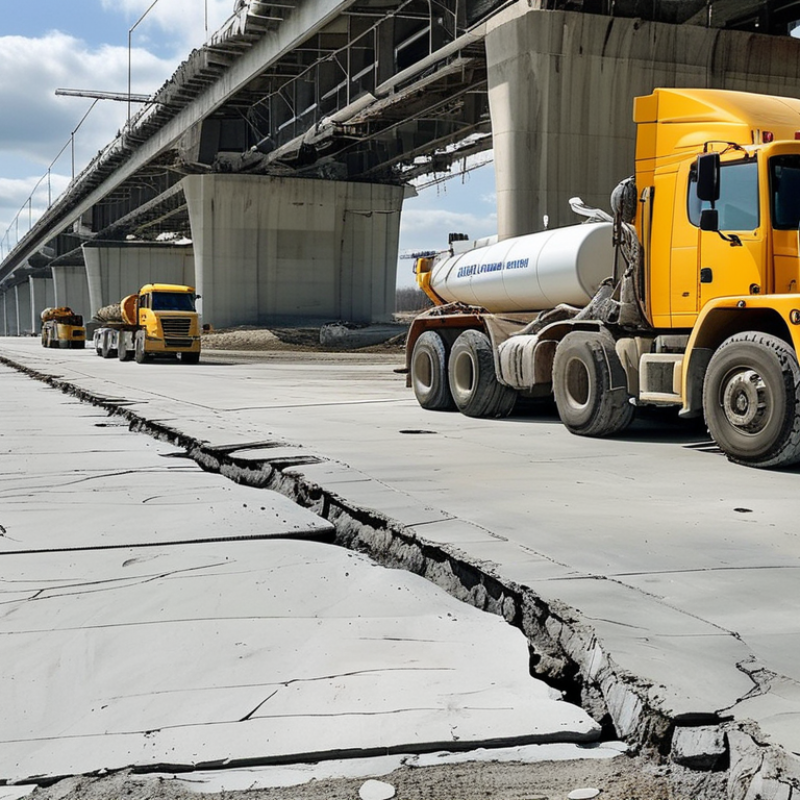
Concrete patch selection should begin with damage and load exposure, not product popularity. ACI 546R supports evaluating depth, bond, moisture, temperature, and service conditions before choosing a repair material. Shallow surface scaling may suit a polymer-modified cementitious patch. Deeper edge breaks often need a low-shrinkage repair mortar with reliable bonding. Structural cracks, exposed reinforcement, or lost bearing areas require an engineer’s assessment. Cosmetic repair is not enough there.
Load exposure changes the decision. A warehouse floor facing forklift traffic needs abrasion resistance and strong bond strength. A bridge deck may face water, deicing salts, vibration, and freeze-thaw cycles. A fast-setting patch can reduce downtime, but rapid curing may increase shrinkage or complicate finishing. Chemical exposure can also defeat an otherwise sound repair. The strongest material is not always the best match. Field reviews often reveal that poor surface preparation caused the failure, not the patch itself.
Tips: Remove weak concrete until a firm surface appears. Clean rust from reinforcing steel and check its section loss. Pre-dampen cementitious repair areas without leaving standing water. Follow the specified thickness range and curing method. Record temperature and moisture during installation. One detail is easy to miss: the patch edges must be properly shaped, not feathered thin. I would also question any repair plan based only on appearance. A patch may look excellent today and still fail under repeated loading.
Compare Cementitious, Epoxy, Polymer-Modified, and Polyurethane Repairs
2026 Top Patch for Concrete Types Which Is Best?
Choosing a concrete patch depends on the damage, moisture, traffic, and repair depth. Cementitious patches suit small cracks, chipped edges, and surfaces that need vapor permeability. They blend naturally with concrete and remain easy to shape. However, they may shrink if mixed too wet or cured in strong sun.
Epoxy repairs provide excellent bond strength for clean, dry concrete. They work well on garage floors, steps, and narrow structural cracks after proper assessment. Epoxy can resist chemicals and abrasion, but it may become slippery when wet. It also needs careful surface preparation. Dust, oil, or weak concrete can cause early failure.
Polymer-modified cement combines familiar cement handling with better adhesion and reduced shrinkage. I often consider it for spalled walkways and vertical repairs because it holds its shape more reliably. Still, application thickness matters. A thick lift can crack beneath a smooth surface.
Polyurethane repairs are useful where movement or water intrusion is involved. They can remain flexible and expand into some damp cracks. Their performance depends heavily on moisture conditions and correct injection control. More material is not always better. I have seen repairs fail because the surrounding concrete was ignored. For durable work, inspect the edges, remove unsound material, and match the patch to the concrete’s movement and exposure. Surface preparation remains the unglamorous deciding factor.
Assess Rapid-Set Strength Using ASTM C928’s 3-Hour Performance Data
2026 Top Patch for Concrete Types Which Is Best?
Choosing the best concrete patch starts with its three-hour performance, not its packaging or claims. ASTM C928 evaluates rapid-hardening cementitious repair materials under controlled conditions. Its three-hour compressive-strength data can show whether a patch may support early service demands. However, laboratory strength does not guarantee perfect field performance. Temperature, surface moisture, mixing accuracy, and repair depth can change the result.
On active repair sites, crews often need strength before reopening a walkway or equipment area. A patch with strong ASTM C928 results may reduce waiting time. Still, compare workability, bond development, shrinkage behavior, and finishing time. A high three-hour number can mislead if the material cracks at thin edges. I would also check the testing temperature and curing method. Small differences matter.
Tips: Read the complete ASTM C928 report, not one isolated value. Match the tested thickness to your repair. Measure water carefully. Prepare a clean, sound substrate. Keep a simple site record of temperature, batch time, and opening time. If field conditions differ sharply from laboratory conditions, question the comparison. That extra caution is easy to skip. It should not be.
Evaluate Bond, Shrinkage, and Freeze–Thaw Durability by ASTM Methods
Choosing the 2026 Top Patch for Concrete Types Which Is Best?
A reliable concrete patch should earn trust through testing, not appearance. Bond strength is a practical starting point. ASTM C882/C882M can measure bond through slant-shear testing. The test helps compare repair materials under controlled conditions. However, it is not a perfect copy of every wall, slab, or bridge repair. Surface cleaning, moisture, temperature, and curing can change the result. Appearance is not proof.
Shrinkage deserves equal attention. ASTM C157/C157M measures length changes in hardened concrete specimens. Excessive shrinkage may create edge gaps, hairline cracks, or debonding. Compare the patch with the existing concrete, not only with a laboratory control. I would also record curing humidity and temperature. Small testing details matter. A missed measurement can weaken an otherwise careful decision.
Freeze–thaw durability requires a harsher examination. ASTM C666/C666M evaluates resistance during repeated freezing and thawing cycles. Look for dynamic modulus loss, cracking, and surface deterioration. A dense patch may still fail if water enters through an open joint. For exterior repairs, combine laboratory results with drainage inspection and field exposure data. No single ASTM method predicts every winter. That limitation should remain visible in the specification, especially when repair depth, moisture, and salt exposure vary.
Comparative performance index for common concrete repair materials. Bond strength is evaluated by ASTM C882, drying shrinkage by ASTM C157, and freeze–thaw durability by ASTM C666. Higher scores indicate stronger bond and freeze–thaw resistance; the shrinkage score is inverted because lower shrinkage is preferred. Values are representative non-proprietary benchmark data and should be verified with project-specific testing.
Choose the Best 2026 Patch by Concrete Type, Climate, and Repair Depth
The best 2026 concrete patch depends on concrete type, climate, and repair depth. A shallow surface chip needs a fine repair compound with strong adhesion. A deep driveway void needs a coarse, shrinkage-controlled mix that can handle vehicle loads. Vertical steps require a non-sag formula. Different damage needs different strength.
Climate changes the decision. In freeze-thaw regions, choose a patch rated for repeated wetting and freezing. Clean the cavity thoroughly, then remove loose edges. In hot, dry climates, slow moisture loss with damp curing and temporary shade. Humid areas need careful drainage. Trapped water can weaken even a well-mixed repair.
I once treated a narrow crack as cosmetic. It reopened after one winter. That mistake showed me why depth matters. Measure the damaged area before buying materials. Patches under 6 millimeters need thin, flexible coverage, while deeper repairs need layered placement. Follow the curing time, even when the surface feels hard. It is easy to rush. For structural movement, wide cracks, or sinking slabs, seek an experienced concrete professional. No patch can correct a failing base.