Mon - Fri 8:00AM - 5:00PM Central
1150 SE Hamblen Rd, Lee's Summit, MO 64081
Choosing the right Overlay Welded Pipe manufacturer requires more than comparing production capacity. It demands careful attention to welding quality, material compatibility, inspection methods, and documented field performance. This guide introduces ten manufacturers with recognized capabilities across energy, chemical processing, mining, and heavy industrial applications. Their products commonly combine a durable base pipe with a corrosion-resistant alloy layer. That structure can improve service life in aggressive environments.
The comparison considers welding technology, cladding thickness control, dimensional accuracy, and quality assurance procedures. It also reviews experience with materials such as nickel alloys, stainless steel, and corrosion-resistant alloys. Reliable manufacturers should provide traceable certificates, welding procedure qualifications, non-destructive testing, and clear repair policies. Factory evidence matters. A clean production line, calibrated inspection equipment, and experienced welding technicians often reveal more than promotional claims. Client references and project records add valuable context.
No ranking is perfectly universal. Operating temperature, pressure, fluid chemistry, pipe diameter, and installation conditions can change the best choice. Some manufacturers may excel in large-diameter pipeline work, while others perform better on complex fittings or customized overlays. Buyers should verify current certifications and inspect technical documentation before signing a contract. Even experienced suppliers can have limitations. That point deserves attention. This overview offers a practical starting point, not a substitute for engineering review. By examining each company’s capabilities, consistency, and transparency, readers can make a more defensible purchasing decision.
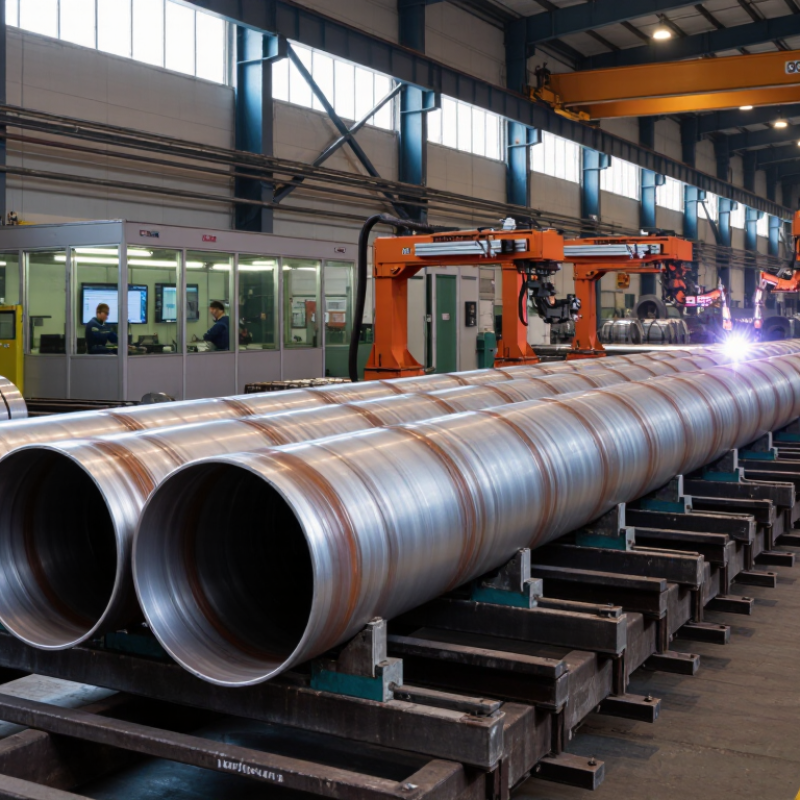
Overlay-welded pipe combines a carbon steel pipe with a corrosion-resistant alloy layer. Cladding usually measures 2–6 mm, depending on service conditions, alloy selection, and required corrosion allowance. The overlay protects the internal bore from sour fluids, chlorides, hydrogen, and high-temperature process media. The hard part is consistency.
During fabrication, welders control heat input, travel speed, interpass temperature, and dilution. Excessive dilution can reduce alloy performance near the fusion boundary. Poor control may also create cracking, porosity, or uneven thickness. A smooth internal surface matters because deposits often begin at small weld irregularities. Visual inspection alone is not enough.
API 5L compliance requires careful interpretation. API 5L primarily covers the line pipe substrate, manufacturing controls, testing, and documentation. Overlay welding does not automatically make a pipe API 5L compliant. Buyers should verify the pipe grade, delivery condition, chemical analysis, mechanical results, welding procedure qualification, and complete material traceability.
Non-destructive testing may include ultrasonic examination, liquid penetrant testing, radiography, and hardness checks. Dimensional inspection should confirm the 2–6 mm overlay thickness across the bore, including ends and repaired zones. Hydrostatic testing and corrosion testing may also be specified by the project.
One detail is often underestimated: repair welding can change local chemistry and hardness. Every repair needs documented approval and reinspection. A certificate alone is not proof of quality.
Calibration records, heat numbers, inspection reports, and qualified personnel provide stronger evidence. Even experienced fabricators can miss small variations, so independent verification remains worthwhile.
A reliable global ranking should measure production capacity, not marketing language. Large facilities can handle long pipe sections, repeat orders, and urgent replacement work. Yet capacity figures can mislead. A factory may list maximum output, while actual overlay production runs much lower. Buyers should compare monthly capacity for the required pipe diameter, alloy, and wall thickness.
Overlay control from 2 to 6 mm deserves close attention. Skilled manufacturers maintain consistent thickness across the pipe body, girth areas, and weld transitions. Their inspection plans should include ultrasonic testing, visual checks, hardness testing, and destructive sample analysis.
A 2 mm layer leaves little room for grinding errors. A 6 mm layer demands stronger heat control and careful dilution management. Small variations matter.
Certifications strengthen technical credibility, but certificates alone do not guarantee performance. Review welding procedure qualifications, operator records, material traceability, and calibration reports. Delivery reliability also belongs in the ranking. Check lead times, packing methods, export documentation, and the supplier’s history with schedule changes. Ask for production photographs and recent inspection records. Not every supplier will provide them. That weakness matters. An experienced manufacturer should explain its process clearly, including where quality risks remain. Ranking the top ten therefore requires balanced evidence: usable capacity, measurable overlay control, recognized certifications, and delivery performance under real project pressure.
A credible top-ten list should examine regions, technology, and product range together. World Steel Association data for 2024 reported global crude steel output near 1.88 billion tonnes. China, India, Japan, the United States, and South Korea remained major producing regions. This capacity supports welded pipe supply, but it does not prove overlay expertise. Public data often mixes ordinary welded pipe with corrosion-resistant products. That distinction matters.
The strongest manufacturers usually combine automated welding with strict inspection systems. Common processes include submerged arc welding, laser cladding, and gas tungsten arc welding. Each suits different wall thicknesses and alloy combinations. Nickel alloys, stainless steels, and cobalt-based overlays serve corrosive or abrasive duties. Qualified producers typically reference API 5L, ISO 3183, ASME Section IX, and ISO 15156 requirements. Technology alone is not enough. Procedure qualification, dilution control, ultrasonic testing, and repair traceability reveal practical competence.
Regional product range also separates leading suppliers. North American producers often emphasize energy infrastructure and field support. European facilities tend to focus on engineered corrosion solutions and demanding specifications. Asian manufacturers commonly offer large production capacity, varied diameters, and competitive delivery schedules. The World Steel Association’s 2024 figures help explain this regional advantage, but capacity rankings remain imperfect. A better comparison checks pipe diameter, overlay thickness, base-metal grades, heat-treatment capability, testing depth, and documented project experience. Buyers should also question vague “premium” claims. They may hide limited alloy options or weak after-sales support.
Top 10 Overlay Welded Pipe Manufacturers Worldwide?
Welding Technologies: SAW, GMAW, PTA, Alloy 625, 825, and 316L Overlays
A credible top-ten ranking should examine process control, not brochure claims. The World Steel Association reported 1.89 billion tonnes of crude steel production in 2023. That scale supports continuing demand for clad and overlay pipe in energy, chemical, and marine service. However, capacity alone proves little. Buyers should request procedure qualifications, dilution results, bend tests, and recent inspection records.
SAW remains productive for long, straight welds and thick-wall pipe. GMAW offers flexible deposition and better access around complex geometries. PTA can produce precise, low-dilution layers, especially where corrosion resistance matters. The choice changes with pipe diameter, heat input, repair access, and required deposition rate. It is easy to overstate PTA’s advantage. Operators still need disciplined powder control and skilled monitoring.
Alloy 625 overlays suit severe chloride and sour-service exposure. Alloy 825 provides strong resistance in acidic environments, while 316L remains practical for moderate corrosion duties. A 2024 welding equipment market analysis by Grand View Research estimated continued global growth through 2030, driven partly by infrastructure and energy projects. Market forecasts are useful, but they are not qualification evidence. The strongest manufacturers combine SAW, GMAW, and PTA capability with traceable chemistry, ultrasonic testing, and documented overlay thickness. Some suppliers still report deposition rates without showing dilution or field failure data. That deserves scrutiny.
Overlay welded pipe selection depends on service conditions, not rankings alone. A credible top-ten comparison should examine weld procedure qualification, operator records, traceability, and long-term corrosion performance. The International Energy Agency’s Oil 2024 report projects global oil demand near 105.4 million barrels per day by 2030. That outlook supports continued scrutiny of pipelines, separators, and refinery piping.
Oil and gas systems require resistance to sour environments, chlorides, erosion, and thermal cycling. Buyers should request chemical analysis, overlay thickness maps, dilution results, hardness testing, and positive material identification. For power plants, high-temperature oxidation and creep resistance matter more than simple corrosion thickness. In both sectors, welding procedures and qualification records should align with ASME Section IX, while sour service may require NACE MR0175/ISO 15156 compliance.
Look closely at the details.
Manufacturers should demonstrate controlled heat input, interpass temperature records, and non-destructive examination results. Ultrasonic testing can reveal incomplete fusion beneath a smooth surface. Radiography may support weld integrity checks, but it cannot replace dimensional verification or metallurgical review. The World Steel Association reported global crude steel production of approximately 1.88 billion tonnes in 2023, showing the scale of energy-intensive industrial assets requiring durable piping. Yet a polished ranking can hide weak documentation. I would also question unusually low prices, because reduced inspection or excessive dilution may appear only after installation. Supplier audits, witnessed procedure tests, and service-specific references remain more reliable than promotional claims.
Technical screening index for overlay welded pipe used in oil and gas, power generation, chemical processing, and mining. Scores range from 1 (low relevance) to 5 (critical relevance). The matrix is application-based and contains no company or brand ranking data.
Selection should verify corrosion and erosion resistance, design pressure and temperature, substrate compatibility, weld-overlay dilution, inspection requirements, and procedure qualification. Welding procedures and welder performance qualifications are commonly evaluated against ASME BPVC Section IX, while project specifications may additionally require design, material, NDE, and sour-service compliance.
