Top Birch Plywood Manufacturers Worldwide
Birch Plywood is no longer judged by appearance alone. Buyers now examine veneer grading, core construction, formaldehyde emissions, certification, and supply reliability. A clean surface may attract attention, but consistent performance matters more.
Dr. Robert H. Falk, a respected wood-products researcher associated with the USDA Forest Products Laboratory, described plywood as “a material engineered for strength, stability, and efficient use of wood.” That principle remains useful when comparing Birch Plywood manufacturers worldwide. The strongest suppliers usually combine carefully peeled birch logs, controlled drying, precise cross-banding, and dependable pressing systems. Small production details can change the result. A weak core, uneven glue spread, or poorly calibrated press may appear only after cutting.
This guide introduces leading Birch Plywood manufacturers across Europe, Asia, and other major production regions. It considers manufacturing experience, panel consistency, product range, environmental documentation, export capability, and customer support. Some companies excel in furniture-grade sheets. Others focus on heavy-duty panels, vehicle floors, construction components, or CNC machining stock. No manufacturer is perfect. Even respected factories may face delays, grade variation, or changing raw-material costs.
That deserves honest attention.
The comparison also has limits. Public data is not always complete, and factory claims require careful verification. Buyers should request current technical datasheets, test reports, sample panels, and traceability information before placing large orders. A polished catalog is only the beginning. The real test is a stable panel under pressure, moisture, machining, and time.
Birch Plywood: Structure, Grades, and Key Performance Features
Birch plywood is built from thin birch veneers bonded into a balanced panel. Each layer is rotated 90 degrees against the next one. This cross-laminated structure distributes loads across the sheet. It also limits expansion and contraction. More plies usually improve stiffness and edge strength. However, thickness alone does not guarantee better performance. Veneer quality and bonding consistency matter just as much.
Grade labels mainly describe surface appearance and manufacturing defects. Common European classifications include B, BB, and CP, but definitions can vary between standards. A BB face may contain small knots, repaired areas, or color differences. These details may be acceptable under paint or laminate. Clearer faces suit visible furniture panels and interior fittings. The core should also be inspected. Gaps along an edge can weaken screw holding and expose the panel to moisture.
Birch plywood offers a smooth surface, strong fastener retention, and reliable machining behavior. Its dense layers produce clean routed edges, although dull tools may cause burning. For humid applications, specify the correct bonding class rather than relying on appearance grade. Standards such as EN 314 and EN 636 can help verify glue performance and intended use. Formaldehyde emissions should be checked through current technical declarations. A simple workshop test is useful: examine cut edges, tap the panel, and look for hollow sounds. Still, this check is not a substitute for certified data. Grade names can mislead when the supplier’s standard is unclear.
Top Birch Plywood Manufacturers Worldwide — Birch Plywood: Structure, Grades, and Key Performance Features
Birch plywood is made from multiple birch veneers arranged with alternating grain directions. Its cross-laminated structure provides good dimensional stability, strength, screw-holding capacity, and a smooth surface suitable for furniture, interiors, transport components, and demanding construction applications.
Chart interpretation: The chart shows the representative areal mass of birch plywood at different nominal thicknesses, calculated using a typical density of 680 kg/m³. Actual values may vary with veneer moisture content, adhesive type, pressing conditions, grade, and manufacturer specifications. Higher-grade panels generally provide more consistent veneer quality, fewer visible defects, and tighter thickness tolerances.
How Birch Plywood Is Manufactured and Certified
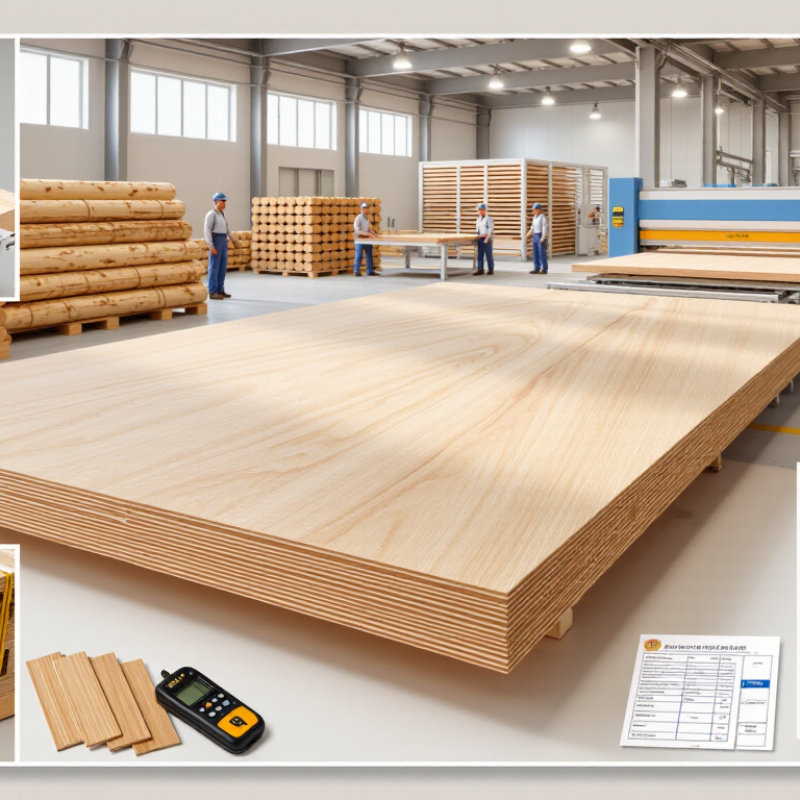
Birch plywood begins with carefully selected birch logs, often chosen for straight grain and limited defects. Manufacturers peel the logs into thin veneers using a rotary cutter. The veneers are dried, graded, and arranged with alternating grain directions. This cross-lamination improves strength and reduces warping.
Layers are bonded with controlled adhesive application. A hot press applies heat, pressure, and time. Small differences can affect thickness, bonding, and surface quality. Panels are then trimmed, sanded, and checked for voids, delamination, and uneven edges. Reliable producers test bending strength, moisture resistance, formaldehyde emissions, and dimensional stability. Results should come from documented laboratory procedures, not visual claims alone.
Tips: Ask for the product standard and test report. Check veneer thickness and panel tolerances. Confirm whether certification covers the factory, material source, or both. Chain-of-custody certification can support responsible forest sourcing, while construction certifications may confirm performance for a specific market. Requirements differ between regions, so a certificate is not automatically universal. That detail is easy to miss. Experienced buyers also inspect sample edges and cut sections, because a clean face can hide internal gaps. Speaking with the manufacturer’s technical team may reveal curing limits, storage needs, and realistic load expectations. Even well-made plywood needs dry storage and careful handling.
Leading Birch Plywood Manufacturers by Region and Production Strength
Top Birch Plywood Manufacturers Worldwide
Leading birch plywood manufacturers differ by region, scale, and forest access. Northern and Eastern Europe remain important production areas, supported by dense birch resources and established veneer technology. The FAO Forestry Production and Trade report estimates global wood-based panel production at nearly 400 million cubic metres in 2023. Plywood represented about 190 million cubic metres. Birch plywood forms only part of that volume, so country-level comparisons need caution.
European mills often compete through consistent veneer grading, low core gaps, and controlled moisture levels. Asian producers add strong export capacity and flexible panel formats. Their advantages include large press lines, efficient logistics, and broad thickness ranges. In North America, manufacturers commonly focus on certified sourcing, engineered performance, and regional construction demand. Production strength is not only about annual output. Press pressure, veneer drying, adhesive control, and laboratory testing affect real quality.
Tips: Check third-party certification, formaldehyde testing, and batch records. Ask for core construction details. A polished surface can hide weak inner layers.
The UNECE Timber Committee market reviews show that transport costs, housing activity, and energy prices strongly influence panel trade. Capacity figures can also be unclear. Some reports count installed lines, while others count actual production. That difference matters. Buyers should compare usable output, not impressive factory claims. A practical inspection includes edge trimming, screw holding, surface sanding, and a simple moisture check. Small defects often become expensive during machining.
How to Evaluate Birch Plywood Manufacturers and Product Quality
Top Birch Plywood Manufacturers Worldwide
How to Evaluate Birch Plywood Manufacturers and Product Quality
Evaluating a birch plywood manufacturer starts with traceable production details. Ask where the birch logs come from, how veneers are dried, and how panels are pressed. Experienced producers should provide factory records, product specifications, and independent test reports. Their documents should identify thickness tolerance, face grade, core construction, bonding class, and formaldehyde emissions.
Inspect a sample under strong side lighting. The face veneer should look even, without open splits, loose patches, or rough repairs. Check the edges for gaps between layers. Measure several points with a caliper, not just the center. A dependable panel usually keeps similar thickness across its surface. Moisture content also matters. Many interior applications perform best when panels remain near normal indoor moisture levels.
Test more than appearance. A small cut can reveal hidden voids, uneven cores, or thin face veneers. For demanding uses, request bending strength, modulus, bond durability, and emission results from an accredited laboratory. Certification can support credibility, but it does not replace physical inspection. A polished sample may hide weak internal construction. I have trusted clean surfaces before and missed edge defects. That mistake changed my inspection routine. Delivery consistency matters too. Compare samples from different batches, because one excellent panel proves very little. Evaluate communication, complaint handling, packaging, and replacement procedures alongside the wood itself.
Common Applications and Global Market Trends for Birch Plywood
Top Birch Plywood Manufacturers Worldwide
Birch plywood is moving beyond workshop furniture. Its even grain, tight veneers, and strong screw holding suit cabinets, desks, stair components, wall panels, and vehicle interiors. In packaging, thin sheets protect instruments and precision equipment where cardboard may flex. Construction uses thicker grades for subfloors, partitions, and reusable concrete forms. Surface quality matters. A clean face reduces sanding and coating time.
Global demand follows housing, renovation, and engineered-wood investment. The UNECE/FAO Forest Products Annual Market Review 2023 reported that wood-based panels remain highly exposed to construction cycles, energy costs, and trade disruptions. FAOSTAT records also show sustained international trade in plywood and veneered panels during the early 2020s. A 2024 industry assessment valued the global plywood market at approximately USD 55 billion in 2023, with low-to-mid single-digit annual growth expected this decade. Birch represents only one segment, so this estimate requires caution.
Europe continues to value certified birch resources and precise machining. Asian markets increasingly use plywood for furniture, interiors, and export packaging. Buyers now inspect formaldehyde emissions, chain-of-custody records, moisture resistance, and core voids—not only price. Regional supply remains uneven. That is the difficult part. Weather, energy costs, trade restrictions, and mill capacity can quickly change availability. Sustainability claims also need verification through current certification and product-level test documents.