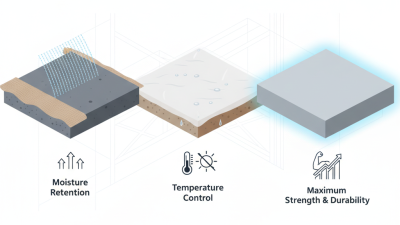
What is Rapidset Concrete and How Does It Work?
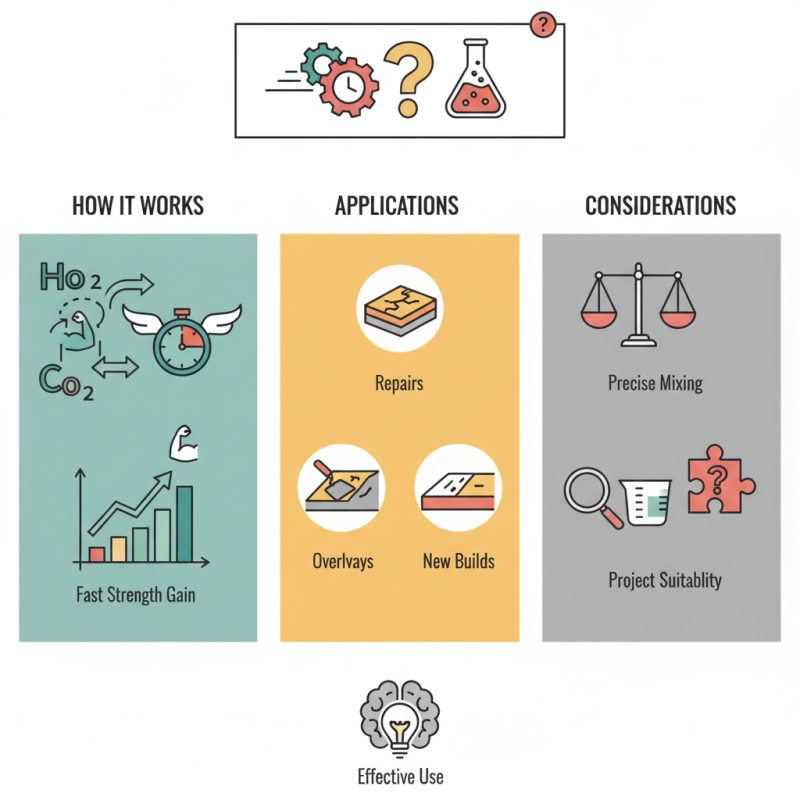
Rapidset concrete is an innovative solution in the construction industry. It stands out due to its fast-setting properties. This type of concrete can achieve strength quickly, making it ideal for urgent projects. Its unique formulation allows for rapid curing, significantly reducing downtime.
The application of rapidset concrete varies widely. It is commonly used for repairs, overlays, and new concrete placements. Workers appreciate its ease of use and ability to set in challenging weather conditions. However, using rapidset concrete does come with its challenges. The need for precise mixing and application can lead to occasional inconsistencies.
While the advantages are clear, there are aspects that require reflection. For instance, not all projects benefit from quick-setting concrete. The right situation is crucial for achieving the desired results. Understanding these factors ensures effective use of rapidset concrete in construction projects.
What is Rapidset Concrete and Its Unique Composition?
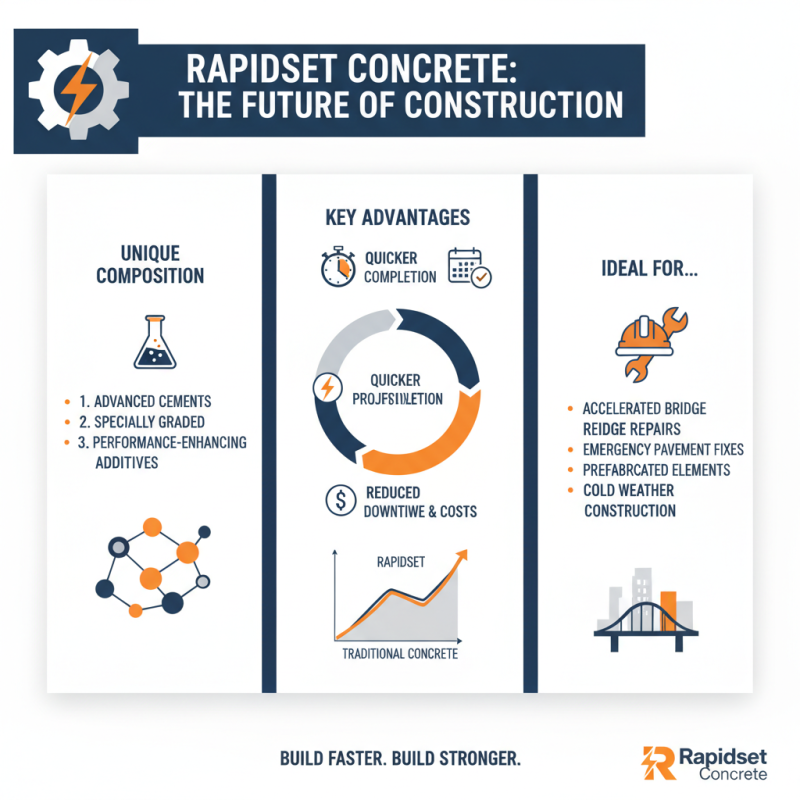
Rapidset Concrete is a modern innovation in construction materials. Its unique composition sets it apart from traditional concrete. It typically includes advanced cements, specially graded aggregates, and additives that enhance its properties. The blend results in a product that cures more quickly than conventional concrete. This rapid curing allows for quicker project completion, which can be a significant advantage on tight timelines.
Another remarkable aspect of Rapidset Concrete is its flexibility. It can be formulated for various applications, from pavements to structural components. The mix can adjust based on the required strength and setting time. However, this adaptability can pose challenges. Achieving the right balance requires precise measurements and careful mixing. Mistakes in the process can lead to inconsistencies in performance.
While Rapidset Concrete offers speed and durability, it also demands attention during installation. Improper application can result in cracking or weakened structures. Contractors must understand its behavior under different conditions. In this fast-paced environment, the need for thorough training is evident. As the construction industry evolves, so must the skills of those who work with these materials.
Key Features and Advantages of Rapidset Concrete in Construction
Rapidset Concrete is gaining traction in the construction industry. Its quick-setting ability stands out. Projects can be completed in less time. According to recent studies, work duration can reduce by 50% compared to traditional concrete. This saves labor costs significantly.
One notable feature is its strength. It reaches compressive strengths up to 6,000 psi within just a few hours. In many cases, early strength gain allows construction teams to open up roads and other structures more quickly. This is crucial in urban settings where time is of the essence. However, it’s important to monitor curing conditions; improper practices can weaken the mix.
The versatility of Rapidset Concrete is another highlight. It can be used in various applications, including pavements, precast elements, and repairs. While the quick set may seem advantageous, it requires careful handling. Rushed processes can lead to mistakes. Understanding the product’s limitations is vital to achieving desired results.
Comparative Analysis: Rapidset Concrete vs. Traditional Concrete Types
Rapidset Concrete is a type of fast-setting concrete that has gained popularity due to its quick hardening properties. It can typically set within hours, making it ideal for urgent repairs or construction projects. This is a stark contrast to traditional concrete types, which can take days to cure fully. The speed of Rapidset allows for quicker project timelines and less waiting.
When considering Rapidset Concrete versus traditional options, it’s essential to look at cost and durability. Rapidset may have a higher initial cost but can save money in labor and time. Traditional concrete is often cheaper upfront, but it requires longer curing. In many cases, the time saved with Rapidset could outweigh the initial expense.
Tips: Always check environmental conditions before mixing. Extreme temperatures can affect curing times. For smaller projects, consider testing with a small batch first. This can help you understand its behavior and make necessary adjustments. While Rapidset offers speed, its application may be tricky. Proper planning is necessary to avoid common pitfalls like uneven curing or working too fast.
Comparison of Setting Times: Rapidset Concrete vs. Traditional Concrete
Understanding the Setting and Curing Process of Rapidset Concrete
Rapidset concrete is known for its quick setting properties. This makes it ideal for projects that require fast turnaround. The setting process begins as soon as the mix is combined with water. The exact timing can vary based on temperature and mix composition. Typically, the initial set occurs within minutes.
As the curing process starts, several factors come into play. Temperature and humidity greatly influence how quickly the concrete hardens. For best results, it’s crucial to monitor environmental conditions. If it’s too hot or too cold, the concrete may not cure properly. This can lead to cracking or reduced strength.
Achieving optimal results with rapidset concrete can be challenging. Workers need to be prepared and work efficiently. This material demands quick application. Mistakes made during mixing or placement can result in significant issues later on. Paying close attention to preparation and application is essential for success.
Applications and Case Studies of Rapidset Concrete in the Industry
Rapidset Concrete has found its place across various industries due to its unique properties. It sets quickly, often within hours. This feature makes it ideal for urgent repairs. For instance, in road construction, using rapid-setting concrete can reduce traffic downtime by up to 50%. Such time savings are invaluable for municipalities needing speedy solutions.
In large-scale projects, like bridges, rapidset concrete has proven effective. A case study indicated that using this material sped up the construction timeline by 30%. Workers completed sections with precision. However, the challenge lies in managing the mixing process. If not mixed correctly, it can lead to inconsistencies in strength.
Tips: Always check environmental conditions before pouring. Temperature affects curing time. Ensure proper training for workers to mix it effectively. While rapidset concrete presents benefits, its application requires careful attention to detail. Each project demands a tailored approach to realize its full potential.
What is Rapidset Concrete and How Does It Work? - Applications and Case Studies of Rapidset Concrete in the Industry
| Application Area |
Description |
Case Study Example |
Benefits |
| Road Repairs |
Quick-setting concrete ideal for repairing roads and bridges. |
Urban road repair in New York City. |
Reduced traffic disruption, fast curing time. |
| Flooring |
Used for industrial flooring applications that require quick turnaround. |
Factory flooring in a manufacturing plant. |
Enhanced productivity, minimal downtime. |
| Precast Components |
Ideal for precast concrete elements that need to be demolded quickly. |
Production of precast concrete panels for a commercial building. |
Increased production rates, flexibility in scheduling. |
| Repair of Infrastructure |
Effective for rapid repair of concrete infrastructures such as pier columns. |
Restoration of a bridge’s support structure. |
Improved safety, reduced repair times. |
| Artistic Features |
Utilized for making decorative concrete features quickly. |
Creation of a public art installation. |
Rapid completion, high aesthetic quality. |