How to Choose the Best Folding Gazebo for Your Needs?
Choosing a Folding Gazebo is not just about finding a canopy that looks good in a product photo. It means matching the shelter to your space, weather, transport needs, and the people who will set it up. A compact model may fit neatly in a car trunk, yet feel cramped around a table. A larger canopy can offer welcome shade, but its frame may be heavier to carry and slower to secure.
Outdoor shelter consultant Evan Brooks offers a useful rule: “Choose for the day you’ll actually use it, not the picture on the box.” That means checking the open footprint, packed dimensions, frame material, canopy fabric, and anchoring options before buying. Pay attention to setup instructions, too. A frame that opens smoothly on a flat driveway may be harder to manage on grass or uneven ground. Small details matter.
This guide explains how to compare Folding Gazebo sizes, materials, portability, and practical features. It also considers how often you plan to use the shelter and where it will stand. No single model suits every yard, event, or budget. And product specifications do not tell the whole story; real setup conditions can be less tidy than a showroom display. The aim is to help you make a grounded choice, with clear trade-offs rather than promises of a perfect fit.
Define Your Coverage Area: A 10 × 10 ft Canopy Covers 100 sq ft
How to Choose the Best Folding Gazebo for Your Needs?
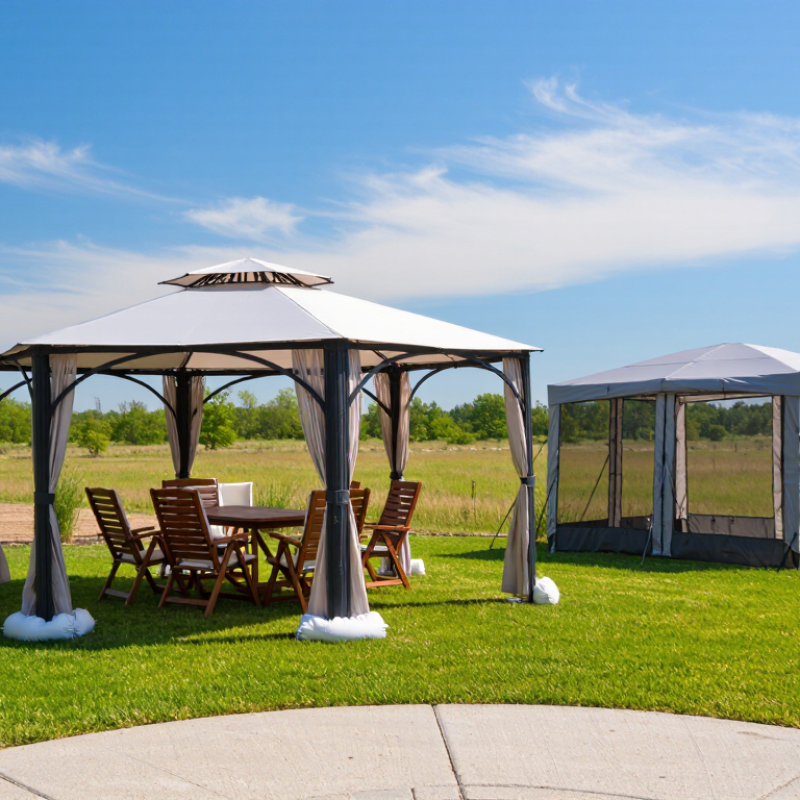
Start with the ground you need to cover. A 10 × 10 ft canopy provides 100 square feet of overhead coverage. That sounds generous, but furniture reduces usable space quickly. A six-seat table, two chairs, and a serving cart may fit tightly. Measure the footprint of every item, then add walking clearance around the edges. People need room to pull out chairs without bumping the frame.
Industry data supports careful planning. The 2024 Outdoor Participation Trends Report from the Outdoor Industry Association recorded 175.8 million U.S. participants in outdoor recreation. More gatherings mean more demand for flexible shelter. Yet coverage is not the same as protection. The National Weather Service defines severe thunderstorm winds as 58 mph or higher. A lightweight folding structure should never be treated as permanent weather protection. Check forecasts, use suitable weights, and remove the canopy when conditions worsen.
Height matters too. A 10 × 10 ft canopy may cover 100 square feet, but sloped fabric can reduce headroom near the sides. I once focused on floor area and underestimated this detail. It made the edges feel cramped. ASCE 7-22 offers engineering guidance for wind loads, but consumer canopies are not automatically designed for every site. Review the product’s rated dimensions, frame material, anchoring instructions, and packed size. A smaller canopy may work better if access paths, uneven ground, or storage limits are part of the plan.
How to Choose the Best Folding Gazebo for Your Needs? — Define Your Coverage Area: A 10 × 10 ft Canopy Covers 100 sq ft
| Nominal Canopy Size | Approximate Coverage Area | Example Uses | Planning Consideration |
| 8 × 8 ft | 64 sq ft | Compact shade for a small table or a few chairs | Measure the setup footprint, including space needed to move around it. |
| 10 × 10 ft | 100 sq ft | General-purpose shade for a small gathering, market display, or patio seating | Area is calculated from the nominal footprint: 10 ft × 10 ft. |
| 10 × 15 ft | 150 sq ft | A longer serving area, display, or seating arrangement | Check that the longer side fits the site and does not obstruct walkways. |
| 10 × 20 ft | 200 sq ft | Larger events or setups that need an extended covered area | Confirm the full footprint, anchoring requirements, and local rules before setup. |
Coverage figures are approximate footprint calculations (length × width). Actual usable shaded space may differ depending on the canopy design, frame, leg placement, and sun angle.
Compare Fabric Specs: Denier, Water Resistance, and UPF 50+ Protection
When choosing a folding gazebo, compare fabric specifications, not just color or thickness. Denier measures yarn weight: one denier equals one gram per 9,000 meters. A higher number can indicate heavier yarn, but it does not guarantee stronger fabric; weave, coating, and stitching matter too. Check the stated denier alongside seam construction. A spec sheet can look impressive, yet a weak corner seam may still leak.
For rain protection, look for a water-resistance rating and ask how it was tested. The AATCC 127 test measures resistance to water pressure, offering a more useful comparison than vague terms such as “waterproof.” Also inspect taped seams and roof joints, where droplets often appear first. For sun exposure, UPF 50 fabric allows about 1/50 of tested ultraviolet radiation through, according to the American Academy of Dermatology’s UPF guidance. That is strong protection, but shade still shifts during the day, and uncovered sides leave skin exposed.
Tips: Check the care label and test the roof with a garden hose before an event. Don’t assume a darker color means better UV protection. If the fabric spec omits a test method, ask for one; I’ve found that missing detail easy to overlook.
How to Choose the Best Folding Gazebo: Fabric Specs Compared
UPF indicates how much UV radiation a fabric blocks. The percentages below are calculated from the UPF rating: blocked UV = 1 − (1 ÷ UPF).
How to read fabric specs: Denier (D) describes fiber thickness, not waterproofness; a higher denier alone does not guarantee better rain protection. Check the fabric’s water-resistance rating, often stated as hydrostatic head in millimeters, and look for UPF 50+ when strong UV protection is a priority. Actual performance also depends on construction, seams, wear, and coverage.
Assess Frame Construction: Steel or Aluminum Tubes, Joints, and Bracing
A folding gazebo can look sturdy in a product photo, but the frame tells you more. Steel tubes often feel reassuringly rigid and can suit frequent setup on a patio or at events. They are usually heavier to carry, and chipped coatings may expose metal to moisture. Aluminum is lighter, making transport and lifting easier, though thin sections can flex under pressure. Check tube dimensions and wall thickness when available; material names alone do not reveal the whole story.
Inspect the joints with the frame partly open. They should align cleanly, lock without excessive force, and show little sideways play. Try the motion gently, not by forcing a stiff hinge. Bracing matters, too: diagonal supports can reduce wobble, while secure connections help keep the roof frame square. Look for bent braces, loose fasteners, sharp edges, or plastic fittings that feel brittle. A few small details. In my experience, a gazebo may still sway in gusts even when its frame feels solid indoors, so no joint design replaces sensible setup and care. If possible, handle the frame before buying; online descriptions rarely show how awkward it feels to fold alone.
Check Wind and Load Ratings: Use Manufacturer-Tested Limits, Not Guesswork
A folding gazebo may feel sturdy in the garden, yet a sudden gust can load its roof and legs unevenly. Check the manufacturer’s tested wind limit, and confirm the required setup: leg weights, anchors, sidewalls, and roof configuration. A rating without those conditions is hard to apply. Ask what “wind tested” means, too. Was the frame secured as instructed, and was the test conducted with walls attached? Small details matter.
The US National Weather Service defines severe thunderstorm wind gusts as 58 mph or higher (NOAA Storm Prediction Center, “Severe Weather 101: Damaging Winds”). That figure is a weather warning threshold, not a safe operating limit for a gazebo. Your local gusts can still exceed a shelter’s rating.
Load ratings need equal care: check whether they cover roof loads, hanging items, or both, and whether the rating assumes evenly distributed weight. A single wet branch resting on one roof panel is not an even load.
It is tempting to trust a heavy frame. I would not. If the manual gives no tested limits, or the setup differs from the test conditions, treat that as uncertainty—not reassurance. Remove the canopy when conditions approach its stated limits.
Match Setup, Packed Size, and Warranty to Your Transport and Use Needs
Choosing a folding gazebo starts with an honest look at how you travel. If it rides in a small car, measure the packed frame before buying, including its carry bag. A long case can consume more trunk space than expected. Check the packed weight too; lifting it from a vehicle alone feels different from reading a product listing. A wheeled bag helps on pavement, but may be awkward across grass or gravel.
Setup time matters when you arrive in wind, rain, or fading daylight. Ask how many people the frame needs and whether the legs lock securely. Practice opening it at home, on level ground, before relying on it at an event. A quick setup claim may not reflect your first attempt. That is worth admitting. Keep the instructions accessible, and inspect joints and fabric seams after repeated use.
Warranty terms can help you judge expected support, but read the exclusions rather than relying on the headline. Confirm what is covered, for how long, and whether damage to fabric or frame is treated differently. Match coverage to your use: occasional garden shade is not the same as frequent transport and setup. Save your receipt and check the frame after each trip. A warranty cannot prevent wear, and even a well-made shelter needs sensible handling.