Mon - Fri 8:00AM - 5:00PM Central
1150 SE Hamblen Rd, Lee's Summit, MO 64081
Choosing a Brick Kiln Oven in 2026 requires more than comparing prices, sizes, and attractive flame patterns. Commercial buyers must examine heat retention, fuel efficiency, installation demands, cooking capacity, and long-term maintenance. A beautiful oven can still become expensive if it heats slowly or loses temperature between batches.
Industry data offers useful direction. The National Restaurant Association’s 2024 State of the Restaurant Industry report highlights continued consumer interest in quality, experience-led dining. That trend supports live-fire cooking, but it does not guarantee profitability. Grand View Research also identifies steady growth in the commercial oven market, driven by restaurants, bakeries, and specialty food businesses. However, market reports often group gas, electric, wood-fired, and brick-built systems together. Their comparisons are not perfectly precise.
Details matter.
A high-quality Brick Kiln Oven should maintain an even baking floor, stable dome heat, and predictable recovery after opening. Look for refractory materials, documented insulation performance, door design, chimney requirements, and service support. The U.S. Department of Energy’s commercial food-service guidance consistently emphasizes equipment efficiency and operational control, both important for reducing wasted heat. Fuel choice also affects ventilation, labor, emissions management, and local installation requirements.
Real kitchens reveal the truth. A busy pizzeria may need rapid recovery, while a small bakery may value thermal stability more. Test the oven with actual dough, trays, and peak production schedules whenever possible. Do not trust specifications alone. They can be optimistic. This guide explains the practical criteria, industry evidence, and common mistakes involved in selecting a Brick Kiln Oven for 2026.
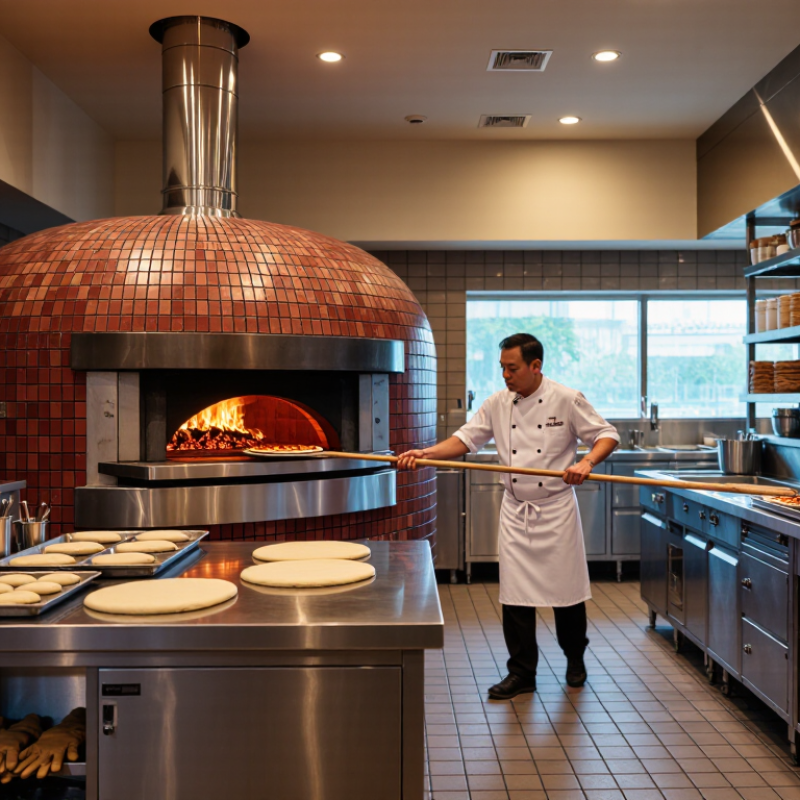
Before comparing oven designs, define what you will actually cook. Pizza, bread, roasted vegetables, and slow-cooked meat require different heat patterns. A compact oven may suit weekly family meals, while a larger chamber supports several dishes at once. Consider how often you will fire it, who will operate it, and where firewood or approved fuel will be stored. A beautiful oven can still be impractical.
Measure the installation area carefully, including the oven body, chimney, door swing, and working space. Leave safe clearance from walls, fences, roof structures, and combustible materials. Your base must support substantial weight without shifting or cracking. Outdoor installations also need drainage and protection from rain. Check local fire and building requirements before purchasing. Measure twice.
During installations, I have seen homeowners focus on cooking capacity and underestimate ventilation. Smoke can collect beneath low roofs or drift toward windows. Think about airflow, nearby seating, and access for cleaning. Thermal mass improves heat retention, but it also increases warm-up time. That trade-off matters when dinner starts in an hour. I once planned too little side workspace, and handling hot trays became awkward. A simple drawing with real measurements can expose mistakes early. If the space is tight, reducing oven size may improve safety, even if it limits batch cooking.
How to Choose a Brick Kiln Oven in 2026?
Kiln type should match production rhythm, available space, and firing control. A clamp kiln costs less, but temperature varies widely across the stack. Downdraft kilns offer better control for small batches. Tunnel kilns support continuous production and consistent quality, but require higher investment and careful material handling. The European Commission’s Ceramic Manufacturing BREF reports typical tunnel-kiln energy use near 1.5–3.5 gigajoules per tonne for bricks and roof tiles. Actual results depend on clay moisture, product thickness, and heat recovery.
Size is not simply a bigger-is-better decision. Measure daily output, brick dimensions, loading space, and cooling time. A 10-tonne batch kiln may suit a small workshop, while a long tunnel kiln needs steady production to avoid wasted heat. Leave room around the chamber for inspection and airflow. Too little space becomes a maintenance problem.
Heating method changes both operating cost and environmental performance. Gas-fired systems usually provide cleaner temperature control than solid-fuel systems, while electric heating can simplify automation where electricity is reliable. UNEP reports that improved kiln design and fuel management can significantly reduce emissions from brick production. Still, published savings are not guarantees. I once underestimated drying time; the kiln appeared efficient, but damp bricks caused cracking. Test a smaller load, record fuel use, and question every quoted efficiency figure.
Compare common brick kiln types, typical firing temperatures, operating scale, and heating methods before selecting equipment for your production requirements.
| Kiln Type | Operating Mode | Typical Size or Output | Common Heating Methods | Typical Firing Range |
|---|---|---|---|---|
| Clamp Kiln | Batch | About 5–20 tonnes per batch | Wood, agricultural waste, or coal | 700–900°C |
| Updraft Kiln | Batch | About 10–50 tonnes per batch | Coal, biomass, gas, or oil | 850–1,000°C |
| Downdraft Kiln | Batch | About 20–100 tonnes per batch | Coal, biomass, gas, or oil | 950–1,100°C |
| Zigzag Kiln | Continuous | About 80–300 tonnes per day | Coal, biomass, or mixed solid fuels | 950–1,100°C |
| Tunnel Kiln | Continuous | About 100–1,000 tonnes per day | Natural gas, LPG, coal gas, or electricity | 1,000–1,200°C |
The chart uses the midpoint of each kiln type’s typical firing-temperature range. Actual performance depends on brick composition, moisture content, kiln design, insulation, airflow, fuel quality, and local operating conditions. Choose a batch kiln for flexible small-scale production and a continuous kiln when consistent high-volume output is required.
How to Choose a Brick Kiln Oven in 2026?
Material selection starts with the hot face. Choose dense firebrick rated for repeated firing, not ordinary construction brick. ASTM C27 classifies fireclay and high-alumina refractory brick by composition and service performance. ASTM C20 testing also measures porosity, absorption, and density. These figures matter because porous bricks can crack after moisture turns into steam.
Insulation controls fuel use and surface safety. The U.S. Department of Energy’s Industrial Decarbonization Roadmap reports that process heating represents about 51% of manufacturing energy use. A kiln oven with ceramic fiber or mineral insulation loses less heat through its roof and walls. Look for documented thermal conductivity at operating temperature, not only room-temperature figures. Thin insulation may look efficient on paper. It can disappoint during a long bake.
Heat retention depends on mass, joints, and curing. The EU Joint Research Centre’s Ceramics BREF reports firing energy commonly around 1.5–5 GJ per tonne, depending on material and kiln design. Dense hearth bricks store heat well, while lightweight insulation heats faster. I prefer a dense floor, tight joints, and a sealed outer shell. Check the door gap with a flashlight. Small leaks become obvious after an hour. Durability is harder to judge. Ask for thermal-shock test results, replacement details, and maintenance records. I would not trust a perfect temperature claim without test conditions. Real ovens are rarely perfect.
Choosing a brick kiln oven in 2026 starts with the fuel available at your site. Wood creates strong heat and flavor, but it needs dry storage and regular ash removal. Gas offers faster adjustment and steadier cooking temperatures. Electric heating is cleaner indoors, yet it may increase energy costs. Ask about fuel efficiency, ventilation needs, and local installation requirements before buying. A reliable temperature controller should respond quickly without creating sudden heat changes. Keep a separate, calibrated thermometer nearby. Built-in displays can drift over time.
Tips: Inspect the door seal, chimney, insulation, and emergency shutoff. Check that controls remain reachable when the oven is hot. Never ignore unusual smoke, cracked bricks, or loose fittings.
Safety depends on both design and daily habits. Choose heat-resistant handles, stable legs, and clear operating instructions. A carbon monoxide alarm is essential for fuel-burning ovens used indoors. The surrounding floor should resist heat and sparks. Maintenance is not difficult, but it is easy to postpone. Brush the cooking surface after cooling, remove ash completely, and inspect internal joints every few weeks. Small cracks may be harmless, though growing cracks need professional assessment. I would not rely only on appearance; a clean oven can still hide damaged insulation. Also, temperature recovery matters. Open the door briefly and watch how quickly the heat returns. That practical test may reveal more than a sales specification.
Choosing a brick kiln oven in 2026 requires more than comparing purchase prices. Estimate the complete cost: kiln shell, refractory lining, chimney, controls, installation, permits, fuel connections, labor, maintenance, and financing. A practical mistake is ignoring site preparation. A weak floor can create uneven loading and expensive repairs.
The European Commission’s Ceramic Manufacturing BREF reports firing energy near 1.5–3.5 GJ per tonne, depending on product and kiln design. The U.S. Department of Energy’s Industrial Decarbonization Roadmap identifies process heating as roughly half of manufacturing energy use. Use these figures carefully.
For example, producing 100 tonnes monthly at 2.2 GJ per tonne requires about 220 GJ of firing energy. Divide that demand by your fuel’s usable energy, then add local fuel prices, electricity, labor, and downtime. A kiln with a lower purchase price may cost more when heat losses remain high.
Inspect insulation thickness, door seals, burner control, temperature sensors, and spare-part availability. Ask for measured fuel consumption, not optimistic sales estimates. A five percent efficiency difference can matter over several years. I would also budget for testing batches, because moisture and clay composition change real consumption.
My early cost models often underestimated operator training and rejected products. That weakness deserves attention. Leave a contingency of at least 10–15% for construction changes, commissioning delays, and unexpected maintenance. Recalculate the total cost using your actual production schedule, not the kiln’s maximum rated capacity.
