How to Choose the Right Stainless Steel Chains for Your Needs?
When it comes to choosing the right Stainless steel chains, the decision can feel overwhelming. Stainless steel chains are known for their durability and resistance to corrosion. However, not all chains are created equal. You need to consider several factors before making a choice.
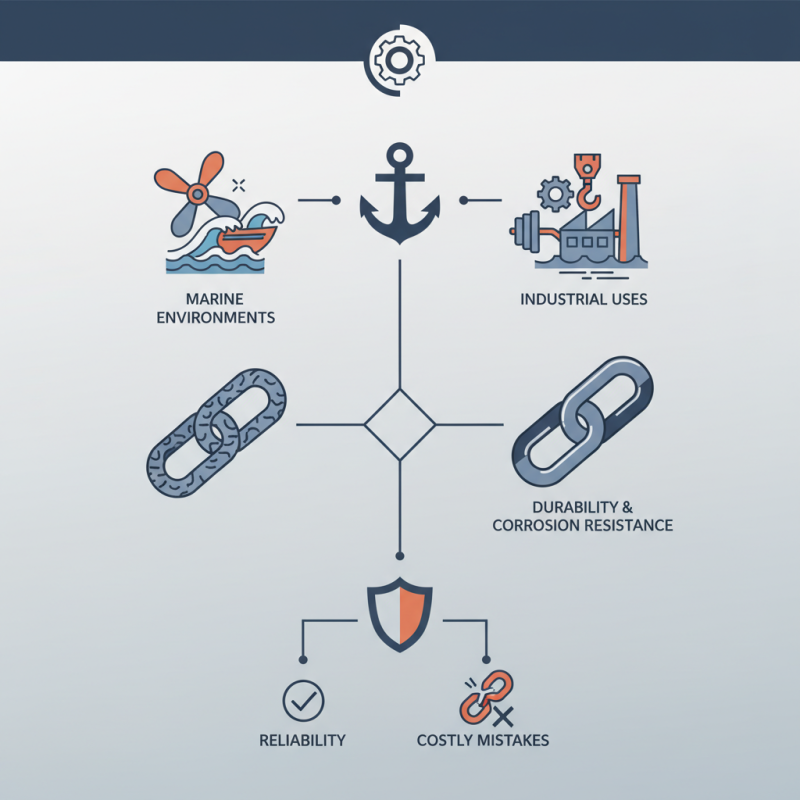
Different applications require different types of stainless steel chains. For instance, marine environments demand chains with high saltwater resistance. Meanwhile, industrial uses may prioritize strength and load capacity. It’s essential to match the chain's specifications with your specific needs.
Ignoring these details can lead to costly mistakes. A chain that isn't suited for your purpose may fail under pressure. It's crucial to research thoroughly and consider expert advice. By investing time in this process, you increase the reliability of your stainless steel chains and ensure they perform as expected.
Understanding Different Types of Stainless Steel Chains
When selecting stainless steel chains, understanding their types is crucial. There are several variations, each designed for different applications. For example, welded chains offer strong tensile strength and are ideal for heavy-duty tasks like lifting. In contrast, roller chains are commonly used in machinery due to their efficiency and smooth operation. According to a report by Smithers, the global demand for stainless steel chains is projected to grow at a rate of 4% annually through 2027, demonstrating their versatile utility.
Next, consider the grade of stainless steel. Types 304 and 316 are most common. Type 316 has higher corrosion resistance, making it suitable for marine environments. In contrast, Type 304 is more suitable for indoor uses or environments with less exposure to harsh conditions. However, if the wrong type is chosen for a specific application, it could lead to premature failure. For instance, using Type 304 in a marine application can lead to rapid degradation, causing safety risks and replacement costs.
Evaluating links and dimensions is also vital. Different link shapes and sizes can affect the chain's strength and flexibility. The American Society for Testing and Materials (ASTM) provides guidelines, but proper matching with the intended use is essential. If not, potential mishaps can occur. Therefore, being informed about these detailed specifications can save time and promote safety.
Evaluating Chain Strength and Load Capacity
When selecting stainless steel chains, evaluating chain strength and load capacity is crucial. Chains come in various grades, each designed for specific tasks. Understanding the weight a chain can handle ensures safety and efficiency. For instance, a chain suitable for light loads may not withstand heavy weight.
Consider the working load limit (WLL) for accurate evaluation. This limit indicates how much load a chain can handle safely. Overloading a chain can lead to breakage or failure, posing risks. Often, it’s a challenge to balance between strength and flexibility. Depending on your needs, flexibility might be just as important as strength.
Reflecting on real-world applications can reveal deeper insights. Some users find themselves underestimating the loads. Inadequate chain strength often results in costly mishaps. Furthermore, environmental factors can affect performance. Corrosion, temperature, and exposure can diminish the lifespan of chains. Choosing wisely requires a thorough understanding of both your needs and the chain's capabilities.
Identifying Corrosion Resistance and Environmental Factors
When selecting stainless steel chains, understanding corrosion resistance is crucial. Different grades offer varying protection against environmental factors. For example, 304 stainless steel is commonly used for many applications, but it may not perform well in coastal environments. Such areas can cause accelerated corrosion.
Research indicates that 316 stainless steel has superior corrosion resistance. This grade contains molybdenum, which enhances performance in chloride-rich conditions. In marine applications, 316 stainless steel is often the recommended choice. A study by the International Journal of Corrosion highlighted that chains made from 316 showed a significant reduction in rust formation compared to 304 in similar environments.
The choice of chain should also consider temperature and humidity levels. Higher humidity can create a more corrosive atmosphere. Pollutants from industrial areas can further increase corrosion rates. It's essential to understand these environmental elements when selecting chains. They influence durability. Investing in higher-grade materials may seem excessive now but can save costs in the long run. Choosing the right stainless steel ensures reliability, longevity, and safety in demanding applications.
Choosing the Right Chain Length and Thickness
Choosing the right chain length and thickness can be challenging. It's crucial to match the chain's specifications with your intended application. Industry reports indicate that nearly 70% of users experience performance issues due to improper chain sizing. Selecting the correct length is essential for functionality. A chain that is too long can lead to excess wear and slippage, while one that is too short may snap under stress.
Thickness also plays a significant role in optimal performance. Data suggests that chains with a thickness that is too thin may not endure heavy loads. Conversely, excessive thickness can add unnecessary weight, impacting efficiency. For example, if you require a chain for heavy machinery, a thicker chain may be beneficial. However, it could also limit flexibility and increase handling difficulty.
Reflect on your specific needs. Consider the environment in which the chain will operate. Adverse conditions can affect longevity and strength. It's worth noting the importance of not only choosing a chain that meets current needs but also anticipating future requirements. Proper evaluation could save you from costly replacements and enhance overall performance.
Assessing Aesthetic Qualities and Surface Finishes
When selecting stainless steel chains, aesthetic qualities play an essential role. The surface finish significantly affects the overall appearance. A polished chain can gleam attractively, while a brushed finish offers a more subdued look. Each finish reflects light differently, altering the visual appeal. Observe how light interacts with the chain. Does it create a vibrant effect, or is it more muted?
Color is another important aspect. Stainless steel often comes in various shades, from silver to darker tones. Consider how these colors complement your style or project at hand. A chain with a unique coating may stand out, but it might also affect durability. Sometimes, the most beautiful chain may not have the best performance. Think about how you can blend aesthetics with functionality.
Don't overlook the size and thickness of the chain. A delicate chain may look elegant but could lack strength. Conversely, a thick chain can be raw and industrial, which can be visually striking. Think about the balance between form and function. Reflect on how the chain fits into your overall design concept. The right surface finish will bring your vision to life, but ensuring it meets practical needs is just as crucial.
Stainless Steel Chains Aesthetic Qualities and Surface Finishes