How to Choose the Right Pavement Concrete for Your Project?
Choosing the right pavement concrete for your project is crucial. It impacts durability, aesthetics, and cost. Various factors influence your decision, such as climate, traffic load, and design requirements.
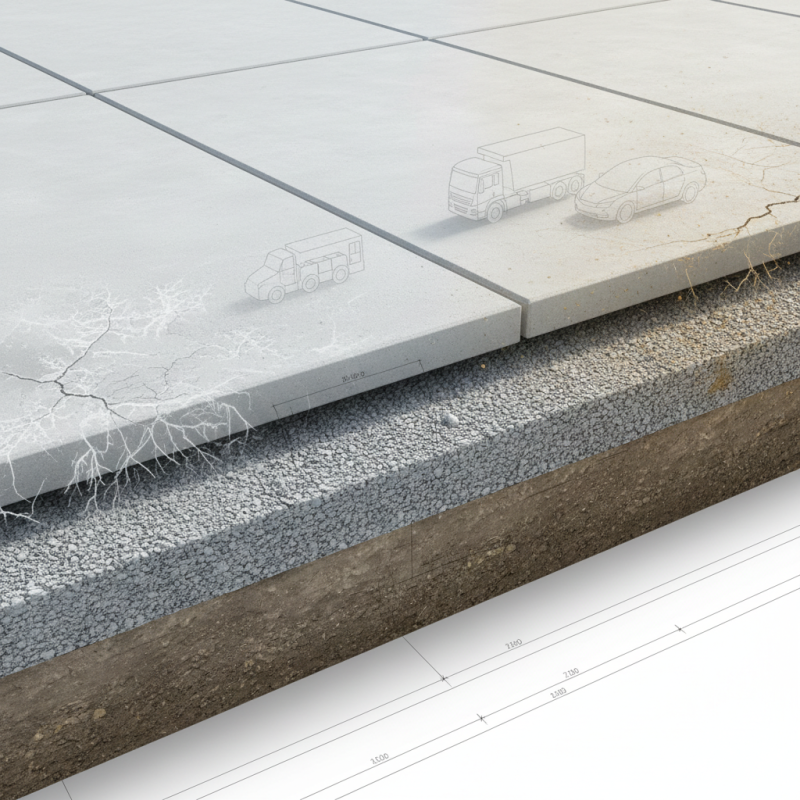
Consider how pavement concrete performs under different weather conditions. For example, freezing temperatures can lead to cracks if not addressed properly. Look closely at the strength and flexibility of the material. A successful project hinges on these details.
Picking pavement concrete may seem straightforward, yet many overlook essential elements. The right selection will not only enhance the visual appeal but also ensure longevity. Reflect on your project's needs carefully.
Understanding Different Types of Pavement Concrete for Construction Projects
When it comes to pavement concrete, understanding the types available is crucial for any construction project. Two common types are traditional concrete and pervious concrete. Traditional concrete is known for its durability and strength. It can withstand heavy loads, making it ideal for highways and commercial areas. However, its impermeability can lead to water runoff issues.
On the other hand, pervious concrete allows water to pass through its surface. This can reduce flooding and protect local waterways. According to research from the American Concrete Pavement Association, implementing pervious materials can decrease runoff by up to 50%. This shows its potential for sustainable construction practices.
Each type has its weaknesses. Traditional concrete may crack over time under shifting conditions. Pervious concrete can become clogged and require maintenance. Choosing the right pavement concrete often involves a trade-off between durability and sustainability. It’s not an easy decision, and each project may require a unique approach based on site conditions and project goals.
Assessing Load-Bearing Requirements for Concrete Pavement Selection
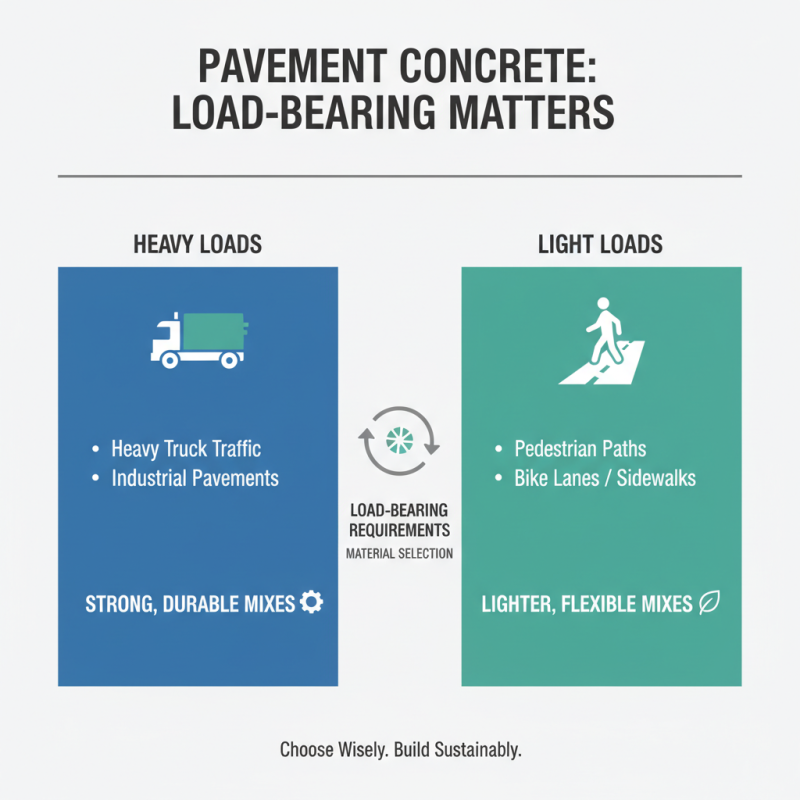
When choosing the right pavement concrete, assessing load-bearing requirements is crucial. Different projects have varying demands. For instance, heavy truck traffic requires stronger materials. On the other hand, pedestrian paths can utilize lighter mixes.
Consider the soil type and environmental factors. A solid foundation can enhance load capacity. Moisture levels also play a role. High moisture can weaken the concrete. Regular testing can provide valuable insights. Some contractors miss this step, leading to future problems.
Thickness is another key factor. Thicker slabs usually bear more weight, but material costs increase. Prototyping a section could reveal unforeseen issues. This can save time and money later. Evaluating load-bearing requirements is not just about numbers; it’s about understanding how concrete performs under stress.
Evaluating Environmental Conditions Impacting Concrete Performance
When selecting pavement concrete for a project, it’s essential to evaluate environmental conditions that significantly affect performance. Factors like temperature fluctuations, precipitation levels, and soil composition can alter concrete longevity and durability. According to the American Concrete Institute, temperature variations can cause expansion and contraction, leading to cracks over time.
Moisture levels play a crucial role too. High humidity can result in delayed curing, risking strength loss. The Concrete Sustainability Hub reports that inadequate drainage can exacerbate these issues, leading to premature deterioration. Local climate data should guide the selection process—certain mixtures may perform better in wetter climates than drier ones. Urban areas may face heat island effects, influencing cooling rates and hydration.
Soil conditions are often overlooked, yet they directly impact concrete stability. Expansive clay can shift under moisture variation. A study by the National Cooperative Highway Research Program emphasized the need for soil analysis before concrete selection. Understanding these environmental impacts ensures a more resilient pavement solution, yet many still neglect these considerations, resulting in costly repairs down the line.
Evaluating Environmental Conditions Impacting Concrete Performance
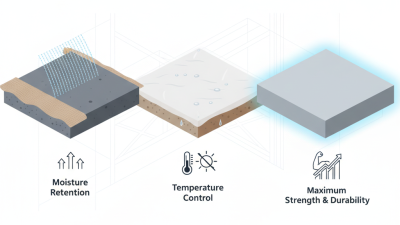
This chart illustrates the impact of various environmental conditions on the performance of pavement concrete, specifically focusing on temperature, humidity, and precipitation levels.
Analyzing Cost-Effectiveness and Lifespan of Various Concrete Mixes
Choosing the right pavement concrete requires careful consideration of cost-effectiveness and lifespan. Different concrete mixes offer varying durability and price points. For instance, high-strength concrete might have a higher upfront cost but could last longer, reducing long-term expenses. In contrast, standard concrete may be cheaper but may require more frequent repairs.
Lifespan is critical for any pavement project. Some concrete mixtures can last decades with minimal maintenance. Consider the environmental conditions. Areas with heavy rainfall might benefit from a mix designed to resist water damage. However, it’s essential to remember that not all mixes perform as expected. Testing and feedback from previous projects can reveal insights you might not anticipate.
Reflect on your priorities. Is your budget more important than longevity? Short-term savings can lead to long-term issues. Check local regulations too. Some regions have specific requirements for concrete used in public spaces. Being aware of these factors can help ensure you choose the most appropriate concrete mix for your needs.
Incorporating Industry Standards and Specifications in Concrete Choices
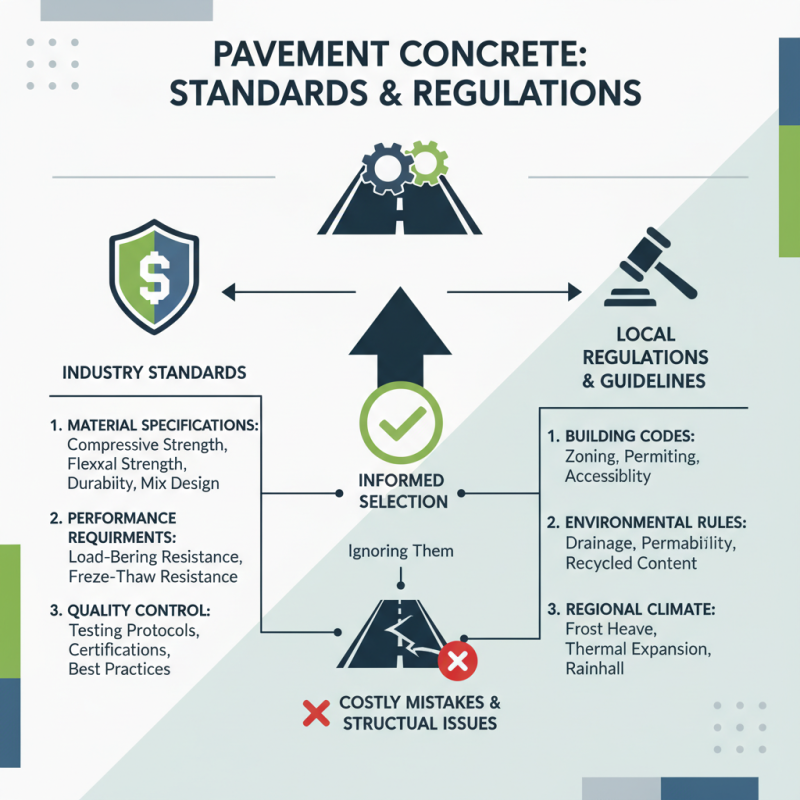
When selecting the right pavement concrete, industry standards play a pivotal role. These specifications guide the choice of materials, ensuring they meet the demands of the project. Understand local regulations and guidelines, as they can vary significantly. Ignoring them can lead to costly mistakes and structural issues.
Consider the project environment. Is it in a high-traffic area or subjected to extreme weather? Each condition may dictate different concrete mixes. For example, freeze-thaw cycles require durable mixtures to prevent cracking. Sometimes, even minor changes in aggregate can affect performance.
Create a checklist based on these standards. Evaluate your options against this list. However, avoid rigid thinking. Concrete choices are not always clear-cut. It’s essential to reassess materials as new information emerges. Relying solely on past experience might limit creativity. There is always room for improvement and adaptation.