
CONTACT PHONE 816-380-4747
OPEN HOURS

Mon - Fri 8:00AM - 5:00PM Central

ADDRESS

1150 SE Hamblen Rd, Lee's Summit, MO 64081

China Top 10 Universal Beam Suppliers Which Should You Buy?

Choosing among China’s top Universal Beam suppliers requires more than comparing quoted prices. Mill location, steel grade, section tolerance, traceability, and export experience can change the real purchase cost. A beam that looks economical on a spreadsheet may arrive with incomplete certificates, uneven flange edges, or packaging unsuitable for long-distance shipping.

The World Steel Association reported approximately 1,005 million tonnes of crude steel production in China during 2024, out of about 1,885 million tonnes worldwide. This scale supports strong manufacturing capacity, but it does not make every supplier equally reliable. Buyers should check mill test certificates, EN 10204 documentation, GB/T 11263 or EN 10365 compliance, ultrasonic testing options, and previous project references. Third-party inspection is also sensible before shipment. It adds time, but prevents expensive surprises.

John Ferriola, former Nucor chairman and chief executive, stated, “Steel is the most recycled material in the world.” His point matters here: responsible sourcing includes material quality, recyclability, and production transparency. However, recycling claims alone cannot prove supplier performance. This guide compares ten Chinese suppliers through practical factors, including section availability, minimum order quantities, quality controls, lead times, and overseas support. The ranking is not perfect. Market conditions change, and public supplier information can be incomplete. Treat it as a starting point, then verify every critical specification before signing a contract.
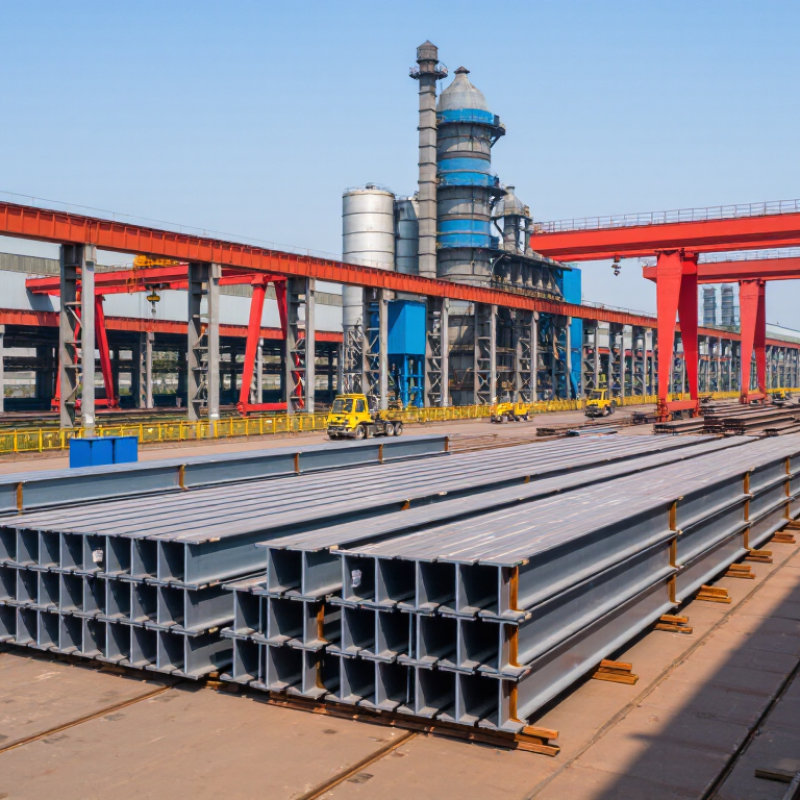
China Top 10 Universal Beam Suppliers Which Should You Buy?

What Are Universal Beams and Where Are They Used?

Universal beams are hot-rolled steel sections with an I-shaped profile and parallel flanges. Their deep web resists shear, while the flanges handle bending stresses. This geometry delivers high strength with relatively low material weight. It is not magic, though. Span, load, connection design, and fire exposure still control performance.

Engineers commonly specify universal beams for building frames, warehouse roofs, mezzanines, bridges, platforms, and equipment supports. A typical beam may sit beneath a concrete floor, transferring loads toward columns through bolted or welded connections. The World Steel Association’s World Steel in Figures 2024 reports approximately 1.89 billion tonnes of crude steel production in 2023. Construction remains one of steel’s largest end-use sectors, supporting continued demand for structural sections.

The UNEP Global Status Report for Buildings and Construction 2024 estimates that buildings and construction consume about 32% of global energy and produce roughly 34% of energy-related carbon emissions. Efficient beam design can reduce unnecessary steel, transport weight, and installation effort. However, selecting only by weight is a weak approach. Engineers should verify section dimensions, yield strength, deflection limits, corrosion protection, mill certificates, and compliance with standards such as GB/T 11263. Small errors matter. A beam that looks oversized may still fail at its connection or under lateral instability.

How to Evaluate China’s Top Universal Beam Suppliers

Choosing among China’s top universal beam suppliers requires more than comparing price lists. World Steel Association data puts China’s 2024 crude steel output at about 1,005 million tonnes. That exceeded half of global output. Scale is useful, but it does not prove consistent beam quality. I would rank suppliers by verified production control, not website claims. Ask for the mill address, rolling capacity, and recent inspection records. Start there.

Match each quotation with the required standard, such as EN 10025 or ASTM A6. Check section dimensions, mass tolerance, straightness, chemistry, yield strength, and impact results. Request heat numbers on bundles. Confirm them against mill test certificates. Independent testing can verify tensile strength and weldability. ISO 9001 helps, but certification alone is weak evidence. During an audit, inspect calibration logs, sampling frequency, surface repairs, and nonconforming-product controls. Small details matter.

Delivery evidence matters too. China Customs recorded 110.7 million tonnes of steel exports in 2024. This shows shipping capacity, not guaranteed punctuality. Compare lead times, port options, packaging photos, loading records, and claims history. Require written tolerances before payment. The cheapest offer may exclude testing, coating, or inland transport. I would use a trial order and third-party inspection. Still, one trial cannot reveal every batch variation. That limitation deserves attention.

Profiles of Ten Leading Chinese Universal Beam Manufacturers

Profiles of Ten Leading Chinese Universal Beam Manufacturers

China’s universal beam sector benefits from a large and technically mature steel base. The World Steel Association’s World Steel in Figures 2024 records China’s 2023 crude steel output at about 1.019 billion tonnes. That scale supports broad beam availability, but volume alone does not prove supplier reliability. Purchasing teams should examine mill certificates, rolling tolerances, traceability, and delivery records.

The ten manufacturer profiles represent different strengths. Profile one focuses on integrated steelmaking and stable monthly output. Profile two serves large infrastructure projects with heavy sections. Profile three emphasizes export packing and port access. Profile four offers common I-beam sizes for warehouses. Profile five highlights automated dimensional inspection. Profile six is stronger in low-temperature steel grades. Profile seven supports customized cutting and bundling. Profile eight maintains flexible production for smaller orders. Profile nine provides extensive test documentation. Profile ten combines regional distribution with short lead times. These descriptions need verification against current factory audits.

Technical evaluation should reference GB/T 11263, EN 10025, or the project’s specified standard. Check flange width, web thickness, straightness, mass tolerance, and mechanical results. Independent testing can confirm yield strength and impact performance. The OECD’s Steel Market Developments reports repeatedly emphasize overcapacity and changing global demand, so quoted prices may shift quickly. A low offer can hide weaker documentation, uneven surface quality, or uncertain delivery timing. I would request recent mill certificates, a sample inspection plan, and three comparable shipment records before selecting any supplier. That step is often missed.

China Top 10 Universal Beam Suppliers: Standard Product Benchmark

This chart compares ten commonly traded Universal Beam (UB) sections by nominal mass per metre. The figures are standardized section values used for comparing steel weight, transport requirements, and structural material consumption; they do not represent company-specific sales or production data.

Reference basis: nominal UB section designations and theoretical mass per metre published in standard structural steel section tables. Actual supplied dimensions and tolerances should be confirmed with the manufacturer.

Comparing Beam Quality, Standards, Prices, and Delivery

When comparing China’s top universal beam suppliers, start with mill evidence, not polished websites. The World Steel Association reported China produced about 1,005 million tonnes of crude steel in 2023. This scale offers broad capacity, but capacity does not guarantee consistent beams.

Request test certificates for every heat. Check yield strength, tensile strength, chemical composition, section weight, and straightness. GB/T 11263 covers hot-rolled H-sections in China, while EN 10025 and ASTM A6 support many export projects. Confirm equivalent grades in writing. A beam may look perfect under warehouse lights, yet fail dimensional checks.

Price comparisons need equal terms. Record grade, length, coating, quantity, inspection, packing, and Incoterm. Compare offers with weekly domestic assessments from Mysteel or international indicators from CRU. Freight can change the final cost sharply.

Delivery also deserves a measurable promise: production days, inspection time, port schedule, and contingency days. The China Iron and Steel Industry Association regularly highlights market volatility, so fixed quotes need clear validity periods.

In practice, a supplier offering the lowest ton price may lose value through short lengths, delayed certificates, or extra port charges. That part is easy to miss. Ask for recent batch photos, loading records, and an independent pre-shipment inspection. Some evaluations still rely too heavily on samples. That is a weakness worth correcting.

How to Choose and Purchase the Right Universal Beam Supplier

Choosing a universal beam supplier starts with evidence, not a polished catalog. China produced 1,019.1 million tonnes of crude steel in 2023, according to World Steel Association’s World Steel in Figures 2024. Large output does not guarantee consistent beams. Ask for mill test certificates, heat numbers, chemical analysis, and mechanical results for the exact batch. Check whether the supplier follows EN 10365 dimensions and EN 10025 steel-grade requirements.

Request recent inspection records, not only sample documents. Verify flange width, web thickness, straightness, corner radius, and surface condition with an independent inspector. A practical trial order can reveal packing quality, labeling accuracy, and delivery discipline. It may cost more initially. That cost can prevent expensive rework.

Compare suppliers using landed cost, not unit price. Include cutting, export packing, inspection, port handling, and inland transport. The World Steel Association forecast global steel demand at about 1.75 billion tonnes in 2024, showing a huge and competitive market. Competition helps buyers, but it also creates confusing offers. Require a clear production schedule and written tolerance commitments. Confirm whether replacement procedures cover damaged or nonconforming beams. Inspect the supplier’s factory when possible. I would not rely on photographs alone. One overlooked detail, such as mixed heat numbers, can weaken traceability during installation. Evaluate communication, technical responses, and document accuracy before signing a long-term contract.