Mon - Fri 8:00AM - 5:00PM Central
1150 SE Hamblen Rd, Lee's Summit, MO 64081
In today's design world, "vertical concrete" has gained significant traction among modern aesthetics. This innovative approach transforms how spaces are perceived. Celebrated architect Maria Lopez states, “Vertical concrete enhances depth while maintaining a sleek finish.” Her insight highlights the potential of this medium.
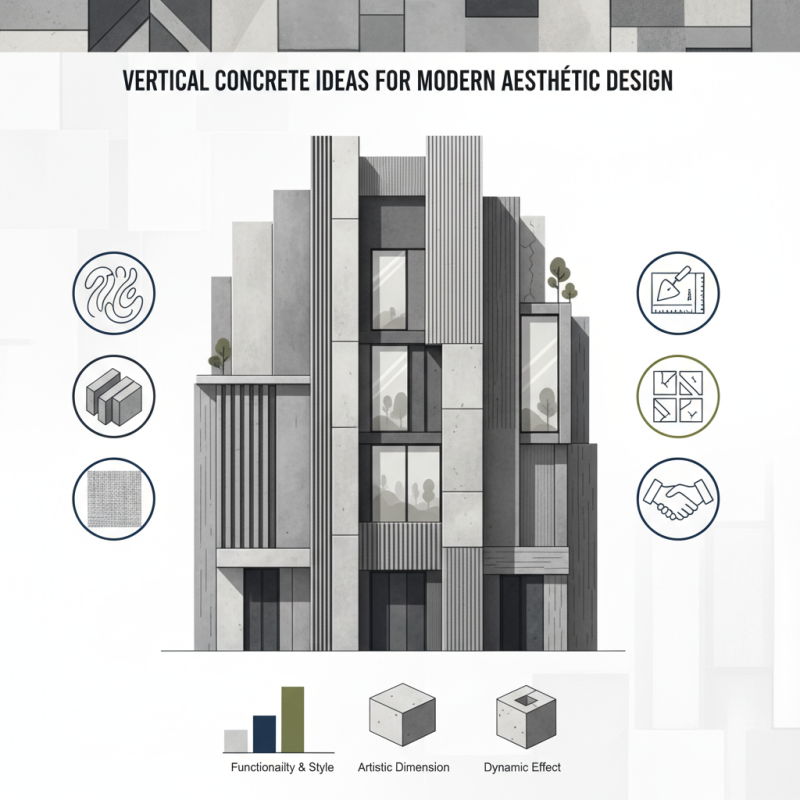
Vertical concrete offers a unique blend of functionality and style. It gives walls an artistic dimension. From public plazas to private homes, the versatility of vertical concrete is striking. However, achieving the desired look can be challenging. The texture requires careful planning and execution. Unexpected flaws can surface, prompting a need for adjustments. This process demands both creativity and technical skill.
Distinctive designs often emerge from vertical concrete. Bold lines and unique patterns create a dynamic effect. But, striving for perfection may lead to oversights. It’s essential for designers to embrace the imperfections that arise. These nuances can add character and authenticity to the final product. As the trend evolves, the importance of expertise cannot be overstated. Reliable workmanship is crucial in ensuring lasting appeal.
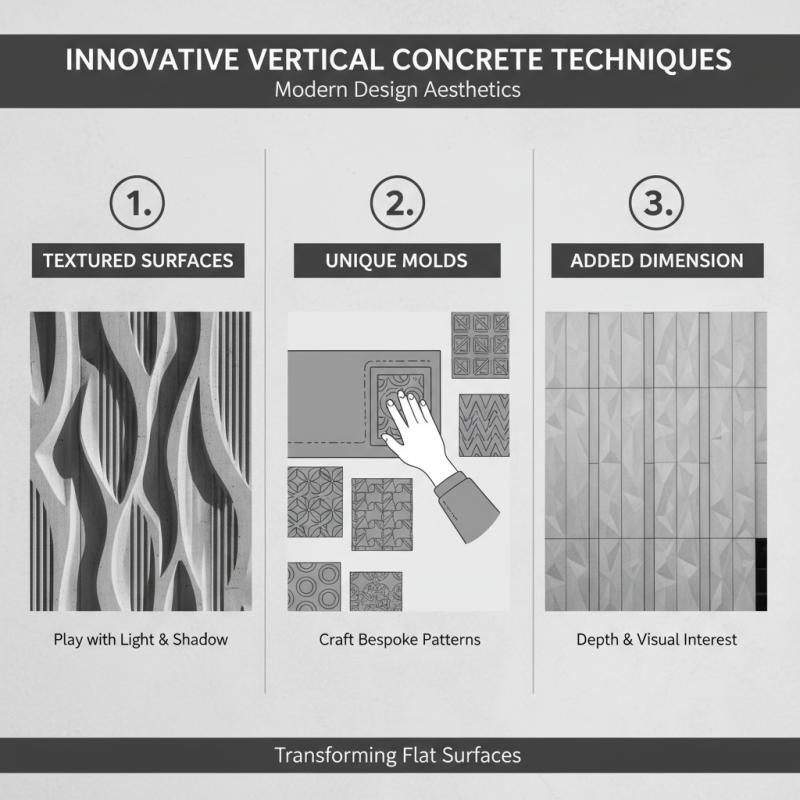
Vertical concrete design has taken modern aesthetics to new heights. One innovative technique involves creating textured surfaces that play with light and shadow. By using different molds, designers can craft unique patterns. These textures add depth and interest to otherwise flat surfaces.
Another fascinating method is the use of color in vertical concrete. By integrating pigments, the material gains a vibrant appearance. This technique not only enhances aesthetics but also allows for personalization in design. However, achieving the right color balance can be challenging. It often requires careful experimentation and a refined eye.
Incorporating vertical gardens with concrete structures is another modern trend. These designs blend nature with urban elements. The contrast of greenery against the concrete creates a stunning visual. Yet, maintaining these gardens can be labor-intensive. It’s important to consider the ongoing care required to keep both concrete and plants thriving.
Incorporating vertical concrete into residential spaces can elevate both style and functionality. This approach adds an intriguing dimension to rooms, offering a contrast to traditional horizontal designs. For example, a bold concrete feature wall can serve as a stunning backdrop. Textured surfaces and varied finishes create visual interest, enhancing the modern aesthetic.
Vertical concrete is not just about looks; it also provides practical benefits. It can improve insulation and durability. Homes with concrete elements often feature lower maintenance needs. However, achieving the perfect balance between style and comfort can be challenging. Selecting the right finish and texture requires careful consideration. Some homeowners might find minimalism daunting, as excessive concrete can create a cold atmosphere.
Experimentation is key. A well-placed vertical concrete element can transform a dull space. Using concrete in unexpected ways, like floating shelves or partition walls, invites creativity. Yet, it's vital to reflect on how these elements blend with existing decor. Understanding the scale and proportion is essential to avoid overwhelming a room. In this way, vertical concrete can harmoniously coexist with other materials, creating a cohesive aesthetic.
Vertical concrete is revolutionizing modern architecture. Its textures and shapes transform spaces, making them more appealing. In commercial design, vertical concrete enhances the aesthetics and functionality of buildings. It can be used for both interior and exterior surfaces. Reports indicate a rising trend, with over 30% of new commercial projects incorporating this material.
Incorporating vertical concrete can be challenging. It requires careful planning and execution. Texture variations and finishes must be considered to avoid a monotonous look. Aim for contrasts to enhance visual interest. Designers suggest pairing vertical concrete with softer materials like wood or glass. This creates a more inviting environment, crucial for commercial spaces.
Participation in workshops can boost skills in using vertical concrete. Practitioners share insights on overcoming common challenges. Use online resources for advanced techniques and trends. Engaging with the community helps refine ideas. Remember, the balance is key. A well-thought-out design will speak to your audience while achieving the intended functionality.
| Idea | Description | Application | Benefits |
|---|---|---|---|
| Textured Vertical Panels | Utilizing molds to create intricate surface designs. | Facade elements in modern buildings. | Visually appealing, adds depth. |
| Vertical Garden Walls | Mixing concrete structures with living greenery. | Commercial and residential settings. | Improves air quality, enhances aesthetics. |
| Cantilevered Concrete Elements | Creating bold architectural features that extend outward. | Balconies and overhangs in urban designs. | Dynamic design, maximizes space. |
| Concrete Privacy Screens | Using vertical slabs to create spatial separation. | Barrier between outdoor areas in cafes. | Enhances privacy, stylish partitioning. |
| Concrete Columns | Sculptural concrete columns that support structures. | Entryways and lobbies in public buildings. | Adds elegance, structural integrity. |
| Concrete Steps and Pathways | Utilizing vertical aspects for accessibility. | Outdoor spaces and commercial entrances. | Durable, modern look. |
| Vertical Concrete Art Installations | Art made from concrete that is erected vertically. | Public art displays and parks. | Attracts visitors, enhances local character. |
| Modular Concrete Systems | Prefabricated concrete units assembled on-site. | Rapid construction of commercial buildings. | Cost-effective, efficient design. |
| Concrete Cladding | Adding a concrete layer to existing structures for aesthetics. | Renovations and restorations of buildings. | Increases durability, modernizes appearance. |
| Concrete Lighting Features | Integrating lighting into vertical concrete installations. | Urban landscapes and commercial entrances. | Enhances visibility, creates ambiance. |
Vertical concrete structures can transform outdoor spaces, adding depth and modernity. These features blend utility with style, creating a unique aesthetic. Whether you opt for planters or walls, the texture of concrete offers a contemporary edge.
To enhance your design, consider incorporating greenery. Vertical gardens pop against concrete surfaces. They soften rigid lines and add a splash of color. Choose low-maintenance plants to ensure sustainability. Ensure proper drainage to keep plants healthy.
Lighting is essential too. Integrated lighting highlights the concrete's texture. Use soft lights to create ambiance during the evening. Reflect on the balance between hard surfaces and natural elements. It can make or break your design. Don’t hesitate to experiment with different textures. Combining rough and smooth finishes can yield surprising results.
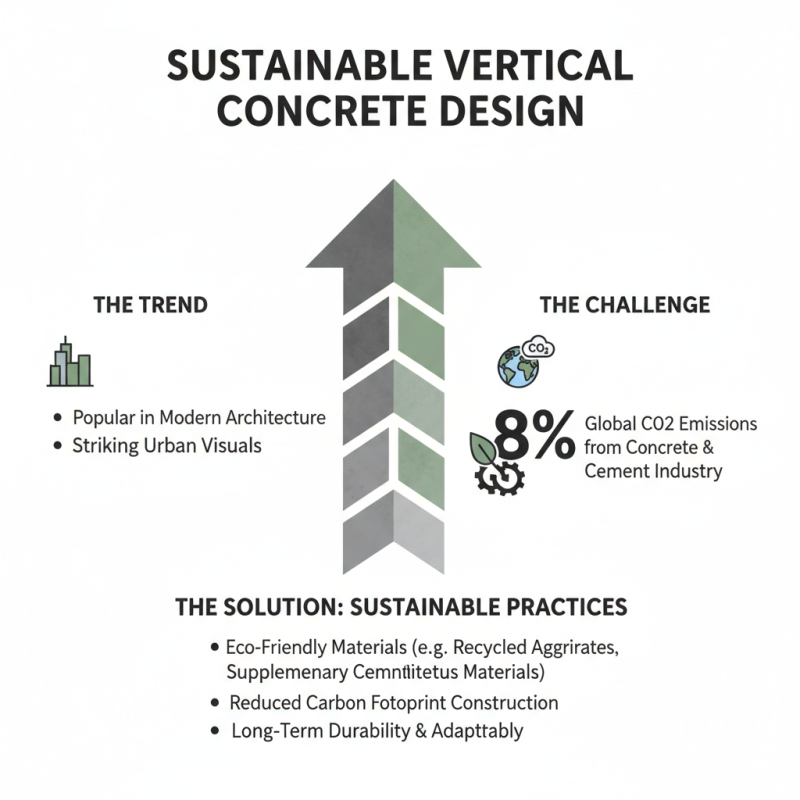
Vertical concrete design is increasingly popular in modern architecture. Its distinctive aesthetics create striking visuals in urban settings. However, sustainable practices must guide this trend. According to a report by the Global Concrete and Cement Industry, the sector is responsible for about 8% of global CO2 emissions. Thus, integrating sustainable methods is essential for minimizing environmental impact.
One effective approach is using recycled materials. Utilizing reclaimed aggregates reduces the demand for virgin resources. Additionally, innovations in concrete mixtures can enhance sustainability. For example, incorporating industrial by-products like fly ash or slag can improve the durability of concrete while reducing its carbon footprint. A study by the American Concrete Institute revealed that using such materials could cut emissions by up to 30%. This is a significant step toward environmental responsibility.
Another practice involves optimizing the design phase. Life cycle assessments can help architects evaluate the long-term effects of their choices. However, not all designs may be practical in terms of maintenance and longevity. Choosing certain textures or finishes could lead to increased wear and require more resources for upkeep. Balancing aesthetic desires with sustainable methods requires careful consideration and adjustments in design strategies.