Top Benefits of Using Strong Concrete in Construction Projects?
Strong concrete is a pivotal material in modern construction. Its durability and resilience make it a preferred choice for building structures. When architects and engineers choose strong concrete, they commit to longevity and stability in their projects.
The benefits of strong concrete are both practical and economic. It resists extreme weather, ensuring buildings remain intact over time. This material also minimizes maintenance costs, reducing long-term financial burdens. Yet, using strong concrete is not without challenges. Contractors must ensure proper mixing and curing processes, or they risk compromising the material’s integrity.
Moreover, the initial cost of strong concrete can be higher than other materials. However, many believe this is an investment in quality and safety. Making informed decisions about this material can lead to successful outcomes in any construction project. Strong concrete truly is a game-changer in the building industry.
Key Characteristics of Strong Concrete in Construction
Strong concrete is essential for modern construction. Its key characteristics make it the material of choice for many projects. One major characteristic is its compressive strength, which typically ranges from 20 MPa to over 40 MPa. This strength ensures buildings can resist significant weight and pressure. According to industry reports, buildings using strong concrete can last up to 50 years longer than those using weaker mixes.
Durability is another hallmark of strong concrete. It withstands harsh weather, chemical exposure, and wear. Studies indicate that structures made with high-quality concrete see less cracking and maintenance issues. This can save costs in the long run. However, achieving the right mix often requires meticulous attention and testing. Errors in proportions can lead to unforgiving results.
Flexural strength, equally important, allows concrete to perform under bending forces. Typical values can reach 4 MPa or higher. It requires careful consideration in design to avoid failures. The balance between strength and workability is delicate. Mistakes can lead to compromised safety and integrity of structures. Ensuring a robust mix design is crucial for successful construction outcomes.
Top Benefits of Using Strong Concrete in Construction Projects
Enhanced Durability and Longevity of Structures
The durability of structures built with strong concrete is remarkable. Research shows that concrete structures can last over 50 years. In many cases, they withstand extreme weather conditions and environmental stresses that might compromise weaker materials. This durability often saves significant costs in maintenance and repairs.
Moreover, strong concrete has excellent resistance to fire and water damage. According to the American Concrete Institute, concrete can maintain its integrity even under high temperatures. This feature is crucial for the safety of buildings. Wet areas like basements remain protected against mold and deterioration, a common issue with less resilient materials. It is vital to consider these factors during the planning phase of construction projects.
However, it is essential to acknowledge that not all instances of concrete usage have been flawless. Some have experienced cracking and structural failures after a few years. These issues often stem from improper mixing or insufficient curing. Each project needs careful oversight to maximize the benefits of strong concrete. Continuous learning from past mistakes can greatly enhance future construction practices.
Cost-Effectiveness in Long-Term Construction Investments
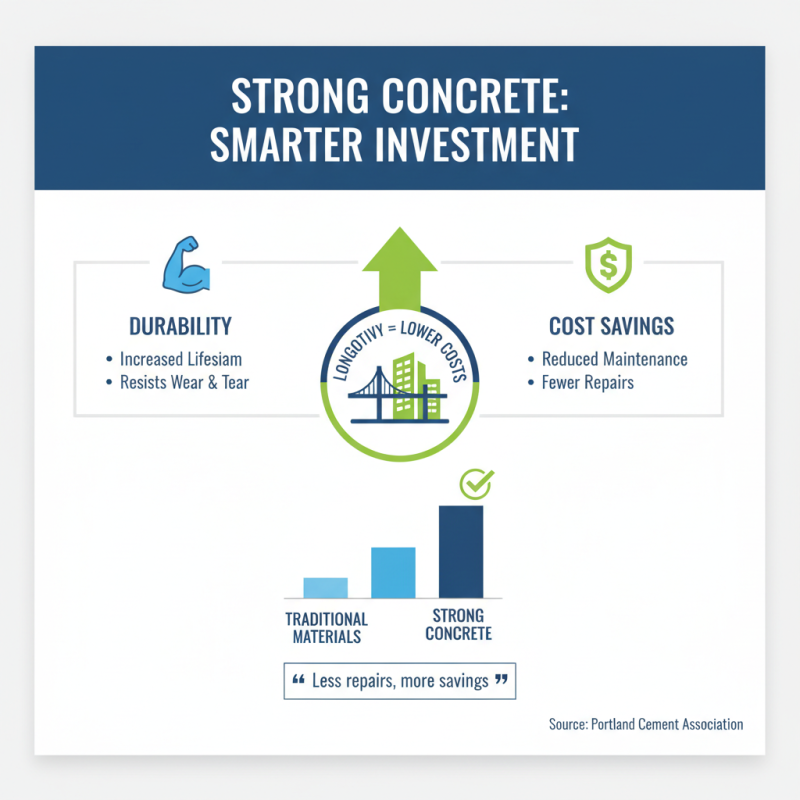
Cost-effectiveness remains a crucial factor in construction investments. Strong concrete offers durability, which can lead to significant savings over time. A report by the Portland Cement Association indicates that concrete structures last longer, reducing the need for repairs. This longevity translates to lower maintenance costs.
When analyzing initial costs versus long-term benefits, strong concrete has an edge. A National Ready Mixed Concrete Association study shows that well-constructed concrete structures can save up to 30% in maintenance expenses over 50 years. This figure is noteworthy for budget-conscious developers.
Durability, however, isn't without challenges. Extreme weather can impact concrete's performance. Sometimes, unforeseen cracking may arise. Decision-makers must balance initial savings with potential long-term issues. Nevertheless, the overall benefits typically outweigh these drawbacks, especially when sustainability is a priority. Investing in strong concrete can yield impressive returns and lasting value, despite its complexities.
Improved Safety and Structural Integrity in Building Design
Strong concrete plays a crucial role in enhancing safety and structural integrity in building design. It withstands various stresses, including heavy loads and environmental factors. This resilience helps prevent structural failures, protecting both occupants and the integrity of the construction. Concrete’s durability means it can resist fire, water, and corrosion. Such features make it an ideal choice for public buildings and high-risk structures.
However, the initial cost of strong concrete might be higher than other materials. This can be a barrier for some projects. Yet, the long-term savings can be significant due to reduced maintenance and repairs. Skimping on material quality can lead to serious problems later on. Ensuring that concrete is mixed and cured correctly is vital for maintaining its strength.
Incorporating strong concrete requires skilled labor and careful planning. Errors in mixing or application can diminish the material’s performance. Using strong concrete means investing time and resources, but the benefits often outweigh the drawbacks. A solid foundation allows for innovative designs and taller structures, pushing the boundaries of what buildings can achieve.
Versatility of Strong Concrete Applications in Various Projects
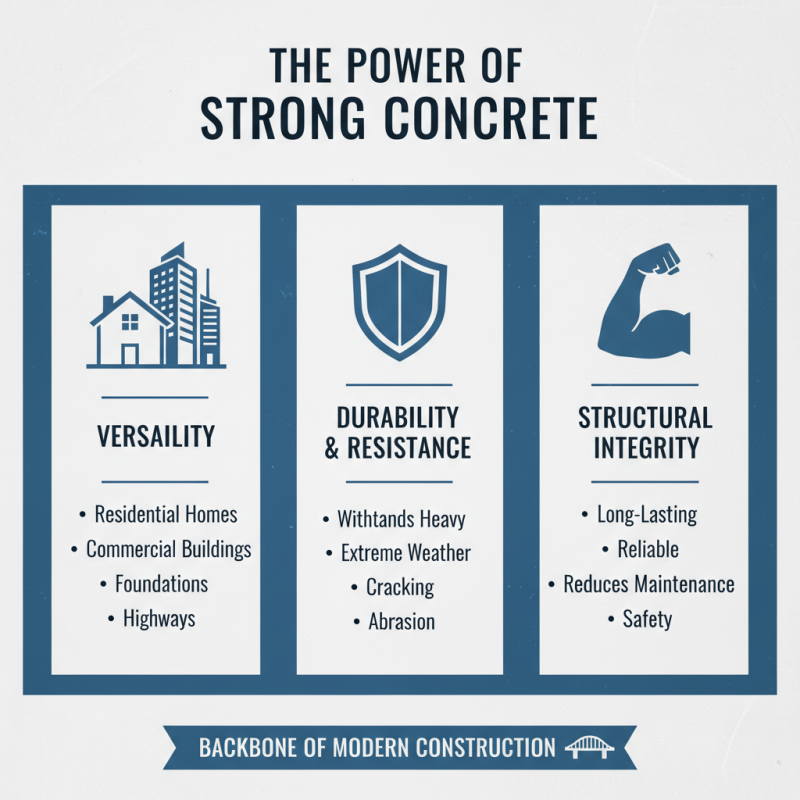
Strong concrete is the backbone of many construction projects. Its versatility makes it a popular choice for various structures, from residential homes to large commercial buildings. Strong concrete offers benefits like durability and resistance to weather conditions. It can withstand heavy loads, making it ideal for foundations and highways.
Applications of strong concrete abound. In bridge construction, it supports large spans and traffic loads effectively. For retaining walls, it offers stability against soil pressure. However, not all projects benefit from its weight. Some structures might require lighter materials for flexibility.
With the rise of eco-friendly designs, there are areas for improvement in the use of strong concrete. Traditional manufacturing methods can be energy-intensive. Innovations in recycled concrete are emerging, but they need further exploration. Finding a balance between strength and sustainability is crucial in future projects.