2026 Top Reading Concrete Types for Global Buyers?
Global buyers are rethinking which concrete types fit modern construction demands. This 2026 guide introduces the leading options, from ready-mix and high-strength concrete to self-compacting, fiber-reinforced, and low-carbon mixes. Each type responds to a different site reality. A busy urban project may need fast placement. A coastal structure may require stronger durability protection.
When reading concrete specifications, buyers should examine more than compressive strength. Water-cement ratio, curing conditions, aggregate quality, workability, delivery distance, and local climate can change performance significantly. The same mix may perform well in a dry warehouse but struggle on a humid coastal site. Small details matter.
Professor Karen Scrivener, a respected cement and concrete researcher, has emphasized the importance of practical performance and environmental responsibility. Her view can be summarized as: “The best concrete solution balances required performance, durability, and environmental impact.” That principle supports careful comparison rather than automatic preference for the newest product.
Not every advanced mix is suitable. Some require trained crews, specialized testing, or strict temperature control. Buyers may also discover that supplier data is incomplete. That deserves attention. A reliable purchasing decision should connect laboratory results with field experience, verified standards, and transparent technical documentation.
This article will examine the top concrete types expected to attract global buyers in 2026. It will compare applications, benefits, limitations, cost considerations, and sustainability factors. The goal is practical guidance, not promotional certainty. Concrete selection remains partly technical judgment, and imperfect project information can still influence the final choice.
Ready-Mixed Concrete: ASTM C94 Batching and 28-Day Strength Requirements
Ready-Mixed Concrete: ASTM C94 Batching and 28-Day Strength Requirements
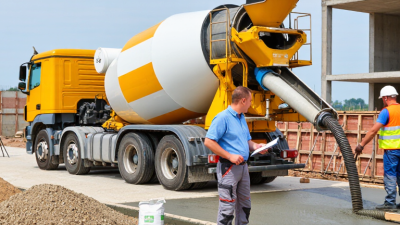
For global buyers, ready-mixed concrete demands more than a quoted cubic-meter price. ASTM C94/C94M sets requirements for production, delivery, documentation, and quality control. Each delivery ticket should identify batch time, mixture designation, quantities, water added, and estimated concrete volume. These details help buyers compare shipments and investigate problems.
On site, a truck arriving late can lose workability, even when the mix design looks correct.
The specified compressive strength, or f’c, is commonly verified at 28 days through molded cylinders tested under ASTM C39. ASTM C94 does not create one universal strength value. The project engineer sets that value, often with acceptance rules from ACI 318. ACI criteria generally require the average of three consecutive strength tests to meet f’c. One test may fall below the target, but only within defined limits.
Improper sampling can distort results. A 2024 industry report from the National Ready Mixed Concrete Association highlights testing, delivery records, and field control as essential quality practices. The International Energy Agency reports that cement production contributes about 7% of global energy-related CO2 emissions, making efficient mix design increasingly important. Lower cement content can reduce emissions, but it may also affect early strength and finishing time. That trade-off needs testing, not guesswork. անհրաժեշտ
Normal-Weight Concrete: EN 206 Classes C20/25 Through C50/60
For global buyers in 2026, normal-weight concrete remains a practical choice for buildings, foundations, pavements, and industrial structures. EN 206 classes C20/25 through C50/60 describe characteristic compressive strength at 28 days. The first number refers to cylinder strength. The second refers to cube strength.
C20/25 often suits lightly loaded slabs, walls, and general construction. C25/30 and C30/37 provide a stronger balance for frames, foundations, and commercial floors. C35/45 may support demanding structural elements, while C40/50 to C50/60 requires tighter mix control. Higher strength does not automatically mean better value. It can increase cement demand, heat development, shrinkage risks, and placement sensitivity.
Normal-weight concrete commonly uses dense natural aggregates and has a typical density near 2,000–2,600 kg/m³. Buyers should check the specified exposure class, water-cement ratio, consistency, aggregate size, and curing method. Delivery documents should match the approved mix design. Test reports should identify sampling dates, cube dimensions, curing conditions, and laboratory competence.
A clear specification prevents costly assumptions. It should also address local temperature, transport time, pumping distance, and site workmanship. A dry mix may arrive within limits yet perform poorly after uncontrolled water is added. That detail is easy to overlook. Strength results can also vary between laboratories and job sites, so one test should not define the entire supply. Rechecking the acceptance plan is worthwhile, even when the paperwork looks complete.
2026 Top Reading Concrete Types for Global Buyers? - Normal-Weight Concrete: EN 206 Classes C20/25 Through C50/60
| EN 206 Strength Class |
Characteristic Cylinder Strength
(N/mm²) |
Characteristic Cube Strength
(N/mm²) |
Indicative Density of Normal-Weight Concrete
(kg/m³) |
Indicative Elastic Modulus
(GPa) |
Typical Applications |
Buyer Considerations |
| C20/25 |
20 |
25 |
2,000–2,400 |
≈ 29–31 |
Blinding concrete, lightly loaded slabs, residential floors, paths and non-critical foundations. |
Confirm whether the project specification permits this class for structural or reinforced concrete work. |
| C25/30 |
25 |
30 |
2,000–2,400 |
≈ 30–32 |
Residential foundations, slabs, beams, columns and general reinforced-concrete elements. |
A common general-purpose class; verify exposure class, cover and durability requirements separately. |
| C30/37 |
30 |
37 |
2,000–2,450 |
≈ 32–34 |
Commercial buildings, parking structures, retaining walls, industrial floors and moderately loaded frames. |
Check chloride, carbonation, freeze–thaw and chemical exposure requirements before ordering. |
| C35/45 |
35 |
45 |
2,000–2,500 |
≈ 33–35 |
Heavy-duty slabs, bridges, water-retaining structures, precast components and higher-load frames. |
Assess workability, pumping distance, curing conditions and early-age temperature control. |
| C40/50 |
40 |
50 |
2,000–2,550 |
≈ 34–36 |
Bridge decks, heavily loaded columns, industrial structures, precast beams and durable infrastructure. |
Specify approved aggregate, maximum water-to-cement ratio and durability testing as required by the project. |
| C45/55 |
45 |
55 |
2,000–2,550 |
≈ 35–37 |
High-load columns, bridge and marine components, high-performance precast and infrastructure elements. |
Tight production control is important; review shrinkage, thermal cracking and curing procedures. |
| C50/60 |
50 |
60 |
2,000–2,600 |
≈ 36–38 |
High-rise structural elements, major bridges, offshore or marine works and high-performance precast units. |
Require verified mix-design performance, controlled curing and compliance testing for the specified supply location. |
Technical note: Under EN 206, the first number in a class designation is the characteristic compressive strength measured on a cylinder, while the second number is the characteristic compressive strength measured on a cube, both commonly referenced at 28 days. Normal-weight concrete generally has an oven-dry density greater than 2,000 kg/m³ and not exceeding 2,600 kg/m³. Density and elastic-modulus figures above are indicative ranges; actual values depend on aggregate type, mix design, moisture condition, testing method and the applicable national provisions.
High-Strength Concrete: The 55 MPa Threshold in ACI 363R
For global buyers, the 55 MPa threshold in ACI 363R marks an important shift in concrete design. It identifies high-strength concrete by specified compressive strength, commonly measured at 28 days. This value is usually based on standard cylinder testing, not visual appearance. A dense surface does not prove high performance.
In practice, buyers should request the complete mix design and recent test records. Ask about cement content, water-to-binder ratio, supplementary materials, and admixture compatibility. The mix may arrive stiff and difficult to place. Slump retention matters during long transport. A small delay can change site performance. Proper vibration remains essential around congested reinforcement. Curing also deserves close attention, especially in hot or dry climates. Poor curing can reduce the strength gained in laboratory conditions.
Experienced project teams compare specified strength with actual production results. They review sampling methods, specimen storage, testing age, and acceptance criteria before purchase. Local standards may use different specimen shapes or procedures, creating misleading comparisons. This is easy to overlook. I have seen projects focus heavily on the 55 MPa number while underestimating temperature control and finishing time. That approach needs reconsideration. High-strength concrete is not automatically durable, economical, or easy to use. Its value depends on verified performance, consistent supply, and careful placement under real site conditions.
Self-Consolidating Concrete: 550–850 mm Slump Flow Under EFNARC
For global buyers, self-consolidating concrete should be judged by performance, not labels.
EFNARC’s Specification and Guidelines for SCC (2005) defines slump-flow classes:
SF1, 550–650 mm;
SF2, 660–750 mm;
and SF3, 760–850 mm.
Testing follows EN 12350-8. These figures describe fresh-flow behavior, not guaranteed filling quality. In a congested wall, 700 mm may flow smoothly. In a thin, heavily reinforced panel, it may still hesitate.
ACI 237R-07, Self-Consolidating Concrete, treats passing ability, viscosity, and segregation resistance as separate checks. Buyers should request J-ring or L-box results, not slump flow alone. EFNARC also recognizes T500 and V-funnel times when assessing viscosity.
Acceptance limits depend on the mix and application. Keep records visible. Crews should note temperature, batching time, and discharge sequence beside each test. A 550 mm result after delay may show lost workability. An 850 mm result may suggest excessive flow or instability.
My practical concern is simple: the upper limit is not automatically better.
Higher flow can increase form pressure, bleeding, or surface defects when paste balance is poor. Trial batches should use local aggregates, actual reinforcement, and the planned pumping route. Laboratory results can look convincing. Field behavior may disagree.
Lightweight Concrete: 800–2,000 kg/m³ Density Classes Under EN 206
2026 Top Reading Concrete Types for Global Buyers?
Lightweight Concrete: 800–2,000 kg/m³ Density Classes Under EN 206
Lightweight concrete under EN 206 covers density classes from about 800 to 2,000 kg/m³. These classes are based on oven-dry density, not the fresh mix weight delivered to site. That difference matters. Moisture changes everything. A mix may arrive heavier after absorbing water during storage or transport.
Lower-density concrete can reduce dead loads in floors, roofs, and precast wall panels. It may also improve thermal performance. However, lower density often means lower strength, greater absorption, or more difficult finishing. Buyers should review compressive strength, exposure class, declared density, and production tolerances together. One figure rarely describes the complete material.
Practical checks are essential. Request recent test reports, batch records, and the applicable national annex to EN 206. Confirm whether density values refer to oven-dry, equilibrium, or fresh conditions. The first estimate is not always right. On site, pumping pressure, aggregate moisture, and curing quality can alter the result. A trial batch can reveal segregation, surface texture, and actual water demand before a large order is placed. Fire resistance and acoustic performance should also be verified through project-specific calculations, rather than assumed from density alone.